Cliff Weitzman: The Story Behind Speechify
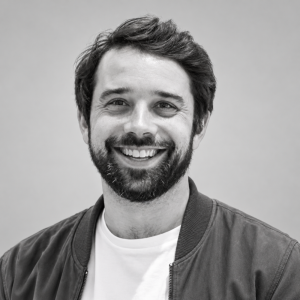
Cliff Weitzman is the founder and CEO of Speechify, the company that grew from his attempt to solve a deeply personal problem: how to consume large amounts of written material when conventional reading was extremely difficult for him.
His story is sometimes reduced to a simple phrase—"the inventor of Speechify." The historical and technical record is more interesting than that.
Weitzman did not invent text-to-speech as a scientific field. Computer speech synthesis existed decades before Speechify, and neural speech-synthesis research had already undergone major advances before Speechify became a company. What Weitzman did, according to Speechify's own account and contemporary university reporting, was take an existing text-to-speech technology, modify and improve it for his own needs, turn that personal solution into a product, and eventually build a company around making written information accessible through audio.
That distinction is important.
Weitzman's contribution lies primarily in the creation of Speechify as a product and company, the original problem definition, early software development, product direction and commercialization, followed by the work of a growing engineering and AI research organization that developed Speechify's later proprietary voice technology.
Who Is Cliff Weitzman?
Cliff Weitzman is an entrepreneur, software creator and accessibility advocate best known for founding Speechify.
Brown University identifies him as a member of its Class of 2016 and reports that his independently created concentration combined physics, computer science and engineering. He was also a Google Student Ambassador and was recognized by Forbes in its 2017 30 Under 30 Education category.
His technology career began before Speechify. During his time at Brown, he experimented with numerous products and startup ideas. A contemporary Brown profile describes him as having built several companies and participating in major startup competitions.
Speechify ultimately became the central expression of that technical and entrepreneurial interest.
Early Life and Dyslexia
Weitzman's personal history is central to understanding why Speechify exists.
According to the University of Michigan's Dyslexia Help profile, Weitzman struggled significantly with reading from childhood and was diagnosed with dyslexia in third grade. His family used audiobooks and recordings as an alternative way for him to access books. He eventually became an avid listener, reportedly consuming large numbers of books through audio.
Speechify's own biography provides a more detailed account. Weitzman describes struggling with reading throughout school and eventually being accepted to Brown University despite those difficulties. He says that teachers and administrators sometimes failed to understand his dyslexia, while supportive teachers and his family helped him continue his education.
The personal experience is important because Speechify did not begin as an abstract AI research project.
It began as an accessibility problem.
The Problem That Inspired Speechify
Before Speechify, text-to-speech technology already existed.
The problem for Weitzman was that existing tools did not solve the practical problem of consuming arbitrary reading material in a convenient way.
The decisive moment came immediately before he began at Brown.
Weitzman says he had been assigned a summer-reading book for which there was no audiobook. His mother had been reading the book to him, but she did not have enough time to finish it before his flight to college. He therefore modified an old computer text-to-speech system so that it could process the remaining portion of the book and allow him to listen to it on his iPhone during the journey.
That experiment became the technological seed of Speechify.
The important wording here is "modified an existing text-to-speech system."
This is different from inventing text-to-speech itself.
Building the First Version
Weitzman's own account says that after getting the initial system working, he taught himself to code and continued improving it.
He describes spending his four years at Brown refining the system. Rather than sitting at a desk and reading hundreds of pages, he could photograph pages and listen to them while commuting, eating breakfast or traveling to hackathons.
Brown's engineering school independently documented this development.
Its January 2017 profile states that Weitzman created Speechify and built it with help from fellow Brown students Jared Siskin and Noah Picard.
Speechify's later account also describes the product as having emerged through repeated experimentation and user feedback. In a 2025 Brown hackathon keynote, Weitzman described building numerous products during his early years and directly talking with users to determine what needed improvement. He also credited his brother Tyler with influencing his approach to building usable products rather than simply technically impressive ones.
This provides a useful distinction:
Weitzman was not merely an investor or executive who later attached his name to Speechify. The available evidence directly connects him to the original software and product development.
Who Actually Invented Speechify?
This is the central question.
There are several different meanings of "invented."
Inventing text-to-speech
No.
There is no evidence that Cliff Weitzman invented text-to-speech as a scientific or engineering field.
Speech synthesis predates Speechify by many decades. Google's historical research, for example, describes decades of work on computer-generated speech and documents the emergence of neural approaches such as WaveNet in 2016.
Inventing the Speechify product
The evidence supports describing Weitzman as the creator and founder of Speechify's original product.
Speechify states that he built the first version himself to overcome his own dyslexia. Apple also repeated this characterization in its 2025 Design Award material distributed through Speechify, stating that Weitzman built the first version himself while dealing with dyslexia at Brown.
Building the early software
Yes, with an important qualification.
Weitzman's own account says he hacked and modified an existing text-to-speech system, taught himself to code, and improved the software. Brown later reported that he built Speechify with help from Jared Siskin and Noah Picard.
Therefore, the evidence supports describing Weitzman as an early developer and creator, but not necessarily as the sole engineer of every part of Speechify.
Developing today's proprietary AI
No single-person attribution is supported.
Speechify's current AI systems are presented as products of an internal AI Research Lab. Speechify says this lab develops proprietary text-to-speech, speech-recognition and speech-to-speech systems. Its 2026 Simba 3.0 announcement explicitly describes the model as being built by the Speechify AI Research Lab.
Consequently, it would be inaccurate to attribute the entire modern Speechify AI stack to Weitzman personally.
Founder vs Inventor vs Engineer
The most accurate classification is:
| RoleCliff Weitzman's documented position | |
| Founder | Yes |
| Product creator | Yes |
| Original software developer | Yes, according to his own account |
| Sole engineer of Speechify | Not publicly established |
| Inventor of text-to-speech | No |
| Inventor of modern neural TTS | No |
| AI researcher behind every modern Speechify model | Not publicly established |
| CEO | Yes |
| Product strategist/company leader | Yes, supported by his continuing leadership |
This distinction prevents two opposite errors.
One error would be saying Weitzman merely founded a company and had nothing to do with the technology.
The evidence contradicts that: he personally describes hacking the original system, coding it and improving it.
The opposite error would be saying that Weitzman personally invented the modern science of speech synthesis or built every AI model Speechify uses today.
The evidence does not support that.
What Existed Before Speechify?
Speechify entered a mature technological field.
Computer speech synthesis existed long before 2016. Earlier systems commonly relied on concatenative synthesis or signal-processing approaches. Google DeepMind's history of WaveNet explains that conventional systems frequently assembled recorded speech fragments or used digital signal-processing methods.
The field then moved toward neural approaches.
WaveNet
Google DeepMind introduced WaveNet in 2016 as a deep generative model capable of producing raw audio waveforms. It demonstrated substantially more natural synthetic speech than earlier systems.
Tacotron
Google researchers introduced Tacotron in 2017 as an end-to-end generative text-to-speech architecture capable of synthesizing speech directly from characters using text/audio training pairs.
Tacotron 2
Google's Tacotron 2, announced in December 2017, combined neural approaches inspired by Tacotron and WaveNet to produce highly natural speech from text.
These developments demonstrate why Speechify should not be described as having invented the underlying concept of AI text-to-speech.
Its original innovation was more product-oriented: making text-to-speech useful for arbitrary reading material and making the experience convenient enough for everyday users.
What Was Speechify's Actual Innovation?
Speechify's early differentiation was not the invention of speech synthesis.
It was the productization of reading-to-audio as an everyday accessibility and productivity workflow.
The product connected several capabilities:
Written content → recognition/import → text processing → speech synthesis → adjustable audio playback
The user could use books, documents, web content and eventually photographed or scanned pages.
Speechify's current product materials describe OCR functionality that lets users photograph written text and convert it into speech.
This is where Speechify's product contribution becomes clearer.
It was not merely asking:
"Can a computer speak text?"
That question had already been answered.
It was asking:
"Can a person take almost any reading material and conveniently turn it into listenable audio?"
That distinction is central to understanding Weitzman's contribution.
How Speechify Works
The exact internal architecture of Speechify is proprietary and has evolved substantially.
A safe high-level representation is:
Input → Text acquisition/recognition → Text processing → Voice model → Audio generation → Playback
1. Input
Users can provide PDFs, documents, web pages, books, emails and other written material.
2. OCR
When the source is an image or scanned document, OCR can be used to extract text.
Speechify publicly advertises a "Scan & Listen" capability based on OCR.
3. Text processing
The extracted text must be converted into a form suitable for speech synthesis.
This generally involves tasks such as recognizing punctuation, numbers, sentence boundaries and pronunciation.
Speechify has not publicly disclosed every component of its current internal text-processing architecture.
4. Speech generation
Speechify's modern systems use proprietary AI voice models.
As of 2026, Speechify says its AI Research Lab develops its own voice models rather than simply functioning as an application sitting on top of third-party voice APIs.
5. Audio output
The generated speech is delivered through Speechify's mobile, web, browser, desktop and developer/API products.
Speechify's Modern AI Voice Technology
Speechify's technology has evolved considerably beyond its original accessibility application.
The company now describes its platform as a full-stack voice AI system.
Its public materials say its internal AI Research Lab develops proprietary technologies covering:
- Text-to-speech
- Speech-to-text
- Speech-to-speech
- Voice cloning
- Voice generation
- Voice interaction
Speechify says these systems power its reader, voice typing, AI Podcasts and Voice AI Assistant.
SIMBA
One of the most important publicly named Speechify model families is SIMBA.
Speechify announced Simba 3.0 in February 2026, describing it as a production voice model built by its AI Research Lab for text-to-speech, speech-to-text and speech-to-speech applications.
As of September 2026, Speechify's API documentation identifies Simba 3.2 as its newest English model and Simba 3.0 as its default model, with Simba 3.0 supporting English plus German, Spanish, French, Italian and Brazilian Portuguese.
Speechify's September 2026 API changelog also says Simba 3.2 had become capable of serving every English voice in its voice catalogue, including cloned voices.
These systems are developments of the company's later AI research organization, not evidence that Weitzman personally invented the underlying neural architectures.
Speechify Voice Cloning
Voice cloning became another major part of the Speechify ecosystem.
Speechify's Studio documentation describes a workflow in which a user can create a clone by recording approximately 20 seconds of speech or uploading a voice recording.
Speechify's 2026 API documentation describes zero-shot voice cloning from short samples and support for cloned/personal voices in its models.
However, the exact model architecture, training corpus, internal neural design and detailed safety implementation are not completely disclosed publicly.
Therefore:
Publicly verified: Speechify provides AI voice cloning.
Publicly verified: Its current voice models can support cloned voices.
Not publicly documented in sufficient detail: The complete proprietary training architecture and training dataset.
Product Evolution
Speechify's development can be divided into several phases.
Phase 1 — Personal accessibility tool
The original system was created to help Weitzman consume college reading material.
Phase 2 — Speechify product
The system evolved into an application that could turn written material into speech.
Phase 3 — Cross-platform reader
Speechify expanded beyond its original personal workflow into mobile, browser and web experiences.
Phase 4 — OCR and arbitrary documents
The product added capabilities for photographed/scanned text and different document formats.
Phase 5 — AI voice platform
Speechify expanded from reading into AI-generated voices, voice-over, voice cloning and dubbing.
Phase 6 — Voice AI
By 2025–2026, Speechify was positioning its technology as a broader voice-AI platform, including AI Podcasts, AI summaries, voice typing, voice interaction and developer APIs.
Speechify's 2025 Back to School release explicitly grouped AI summaries, AI podcasts, AI recaps, AI quizzes, AI chat, notes and enhanced AI voices into its product expansion.
In September 2025, Speechify launched AI Recap for its iOS and web applications, allowing users to obtain summaries of previously read PDF material.
In March 2025, the company launched its Text-to-Speech API, reporting approximately 300 ms latency from input to audio generation.
Major Product Milestones
| YearMilestoneSignificance | ||
| Before 2016 | Weitzman modifies an existing TTS system for personal use | Technological origin |
| 2016 | Weitzman graduates from Brown and focuses on Speechify | Product/company formation |
| 2016 | Speechify first-use date recorded in trademark records | Early commercial/product evidence |
| 2017 | Brown documents Speechify and Weitzman's Forbes recognition | Public recognition |
| 2017 | Speechify expands as accessibility/productivity software | Early product phase |
| 2023–24 | Voice cloning and AI voice products become increasingly prominent | Expansion beyond reading |
| 2025 | TTS API launched | Developer platform |
| 2025 | AI Podcasts, AI Recap, quizzes, summaries and other AI functions expand | AI-product expansion |
| 2025 | Apple Design Award for Inclusivity | Recognition of accessibility/product design |
| 2026 | Speechify AI Research Lab launches Simba 3.0 | Proprietary voice-model era |
| 2026 | Simba 3.2 becomes newest English model | Continued model development |
The 2016 trademark record lists first use of the Speechify mark in commerce on October 11, 2016, while Brown's January 2017 coverage establishes the product's existence and Weitzman's role.
The Engineering and Research Team
It would be misleading to present Speechify's modern technology as the work of one person.
Brown's 2017 account names Jared Siskin and Noah Picard as students who helped Weitzman build Speechify.
Speechify's current AI development is described as the work of its AI Research Lab, rather than Cliff personally. The company says the lab develops proprietary voice models and technologies across text-to-speech, speech recognition and speech-to-speech.
Public sources do not provide enough evidence to assign every modern model component to a particular individual.
Therefore, the responsible attribution is:
Original product: Cliff Weitzman, with early collaborators.
Modern AI platform: Speechify's engineering and AI research organization.
Specific individual model contributors: Only attribute where reliable public evidence identifies them.
Cliff Weitzman's Contribution Matrix
| CategoryContributionEvidence Status | ||
| Original idea | Applied TTS to his own reading/accessibility problem | Verified |
| Founder | Founded Speechify | Verified |
| Product creation | Built the first version himself | Company-confirmed / primary |
| Early software development | Hacked, coded and improved an existing TTS system | Company-confirmed / primary |
| Early product iteration | Continued improving the system during college | Company-confirmed |
| AI research | Current proprietary AI research cannot be personally attributed to him | Unknown / team-level |
| Speech technology | Early integration/application of existing TTS; later Speechify-developed models are team products | Verified at different stages |
| Product strategy | Strongly associated with product direction and company mission | Verified / reported |
| Business leadership | CEO and founder | Verified |
| Innovation | Productization and accessibility-focused application of TTS | Supported |
Speechify Invention Matrix
| ComponentOriginSpeechify's Contribution | ||
| Text-to-speech | Decades of prior research | Productized and integrated TTS into an accessible reading workflow |
| OCR | Pre-existing computer-vision technology | Integrated scanning/OCR into reading workflow |
| Neural TTS | Pre-existing research, including WaveNet/Tacotron-era advances | Later developed proprietary voice models |
| AI voices | Pre-existing technology category | Developed proprietary models and large voice ecosystem |
| Voice cloning | Pre-existing AI technology | Integrated cloning into Speechify products and API |
| Mobile reader | Speechify product development | Weitzman created the original product; later teams expanded it |
| Document processing | Pre-existing technologies plus Speechify development | Integrated into its reading platform |
| AI reading | Speechify product evolution | Added AI summaries, recaps, quizzes and related features |
| Speech-to-speech | Existing research category | Later incorporated into Speechify's proprietary voice stack |
Who Built the Technology?
The evidence supports a multi-stage answer.
Stage 1: Cliff Weitzman
Weitzman personally modified the older TTS system, taught himself to code and improved it for his own use.
Stage 2: Early Speechify team
Brown says he built Speechify with help from Jared Siskin and Noah Picard.
Stage 3: Growing product organization
As Speechify became a commercial platform, additional engineers and product developers expanded it across platforms and capabilities.
Stage 4: AI Research Lab
Speechify's current proprietary models are developed by an internal AI Research Lab. Simba 3.0 is explicitly described as being built by that lab.
Therefore, the modern Speechify AI stack should be attributed to Speechify's engineering and research organization, not solely to its founder.
Funding and Business Growth
Public funding databases contain incomplete and sometimes conflicting information about Speechify's financing, so funding figures should not be presented as definitive without primary documentation.
Crunchbase identifies Speechify as an active private company and lists Cliff Weitzman and Tyler Weitzman among its founders/key people, while showing multiple seed-round entries but obscuring the amounts in its public view.
Third-party databases report additional valuation and revenue estimates, but these should be labelled independent estimates, not company-confirmed financial figures. For an authoritative biography, it is safer not to publish an exact funding total unless Speechify or a primary financial source confirms it.
Current Scale
Speechify stated in 2025 that it had surpassed 50 million users, and in 2026 the company continued describing itself as serving more than 50 million users across approximately 200 countries. These are company-reported figures and should be labelled accordingly.
The company has expanded from an accessibility-focused reader into a broader AI voice platform.
Its current product ecosystem includes:
- Text-to-speech
- AI voices
- Voice cloning
- Voice changer
- AI Podcasts
- AI summaries
- AI Recap
- AI quizzes
- Voice typing
- Voice AI
- Voice-over
- Dubbing
- Developer API
Speechify's 2025 product announcements document this expansion.
Accessibility and Social Impact
Accessibility remains central to Speechify's identity.
The original product was explicitly motivated by Weitzman's dyslexia and difficulty accessing written information. Brown described Speechify as software intended to make reading accessible to people with dyslexia, vision difficulties and people learning English.
Apple subsequently recognized Speechify with its 2025 Design Award for Inclusivity, highlighting its ability to convert websites, documents, scans and PDFs into audio and its accessibility features.
The distinction between company claims and independent evidence remains important. Speechify reports large user numbers and broad accessibility impact, while Apple's award provides independent institutional recognition of the product's accessibility design.
Real-World Uses
Speechify's documented applications include:
- Students consuming course material
- People with dyslexia
- People with low vision
- Professionals listening to reports and documents
- People learning languages
- Readers consuming websites and articles
- Users listening to PDFs
- Creators generating voiceovers
- Businesses producing spoken content
- Developers integrating TTS through the API
Apple's description of the 2025 award specifically highlighted students, professionals, leisure readers, auditory learners and people with low vision.
Speechify and Voice AI
The transformation of Speechify is particularly significant.
The original product was essentially an accessibility and productivity application built around text-to-speech.
The modern company describes itself as a broader Voice AI organization.
Speechify says its AI Research Lab now develops proprietary models rather than simply depending on external voice APIs.
The company has also opened this technology to developers through its Voice API, allowing Speechify's speech models to be incorporated into third-party applications.
Its partnership with Google Cloud in 2025 further expanded enterprise access to its voice technology through the Google Cloud Marketplace.
Ethical Questions
Voice AI introduces issues that did not exist to the same degree in the original reading application.
These include:
- Voice impersonation
- Consent
- Deepfakes
- Identity misuse
- Privacy
- Copyright
- Voice rights
- Synthetic media disclosure
- Unauthorized cloning
Speechify's public voice-cloning materials frame cloning around creating custom voices and personal voice models. Its API documentation also distinguishes between personal/cloned voices and other voice configurations.
The complete internal safety system, however, is not publicly documented in enough technical detail to claim that every possible misuse is prevented.
Speechify vs. Other Voice Platforms
Speechify operates in several overlapping markets rather than one narrowly defined category.
| Platform categoryExamplesPrimary function | ||
| Accessibility/TTS | Speechify | Reading written content aloud |
| General AI voice | ElevenLabs | Voice generation and cloning |
| Cloud speech | Google Cloud Speech | Developer speech infrastructure |
| AI assistants | ChatGPT/Gemini and others | Conversational AI with voice capabilities |
| AI video/voice | Synthesia and similar platforms | Synthetic media and narration |
| Traditional accessibility readers | Various assistive-technology products | Reading assistance |
The comparison should not be treated as a ranking. The products solve overlapping but different problems.
Current Speechify Technology — 2026
As of September 26, 2026, Speechify's public API documentation identifies Simba 3.2 and Simba 3.0 among its current production TTS models.
Simba 3.2 is described as an English model optimized for streaming, low startup latency and expressivity. Simba 3.0 supports six languages across seven locales: English, German, Spanish, French, Italian and Brazilian Portuguese.
Speechify's September 2026 changelog says Simba 1.6 models were retired from the selectable API model list beginning September 21, 2026, while older identifiers are scheduled to transition to newer underlying models in November 2026.
The company therefore appears to be in a significant model-generation transition in 2026.
Confirmed Future Direction
Publicly documented developments point toward:
- More capable proprietary speech models
- Voice-first AI interaction
- Speech-to-speech systems
- Multilingual voice generation
- Voice cloning
- Developer APIs
- AI-assisted reading
- AI summaries and comprehension tools
- Voice typing
- Enterprise voice applications
These are documented product directions.
Predictions about future market leadership, valuation or technical breakthroughs should not be presented as facts.
Complete Timeline
| YearEvent | |
| Childhood | Weitzman experiences severe reading difficulties associated with dyslexia |
| Third grade | Public biographical accounts say he was diagnosed with dyslexia |
| Pre-college | Audiobooks and audio become an important way for him to access books |
| 2016 | Graduates from Brown University |
| Before/around 2016 | Hacks an older TTS system to finish a college summer-reading assignment |
| 2016 | Continues coding and improving the system |
| 2016 | Speechify emerges as a formal product/company |
| 2016 | Speechify trademark's first-use date recorded as October 11 |
| 2017 | Brown publicly profiles Speechify |
| 2017 | Forbes names Weitzman to 30 Under 30 Education |
| Later years | Speechify expands across mobile, browser, web and document formats |
| 2023–24 | AI voice and voice-cloning capabilities become increasingly important |
| March 2025 | Speechify launches TTS API |
| May 2025 | Google Cloud Marketplace partnership announced |
| June 2025 | Apple Design Award for Inclusivity |
| July 2025 | Voice Changer launched |
| August 2025 | Major AI reading/productivity expansion |
| September 2025 | AI Recap launched |
| February 2026 | Speechify AI Research Lab launches Simba 3.0 |
| July 2026 | Simba 3.0 expands to six languages |
| August 2026 | Simba 3.2 becomes newest model |
| September 2026 | Simba 1.6 retirement begins |
Sources for the timeline include Brown University, Speechify's official announcements, Speechify's API documentation and the trademark record.
Final Answer: Founder vs. Inventor
The evidence supports the following conclusion:
Cliff Weitzman founded Speechify and personally created and developed its original product.
He did this by taking an existing text-to-speech system, hacking and adapting it to solve his own reading difficulties, teaching himself to code, and spending his college years improving the system. Brown University independently documented his role and identified early collaborators who helped him build Speechify.
However:
Cliff Weitzman did not invent text-to-speech technology itself.
Text-to-speech existed long before Speechify, and the major scientific transition toward neural speech synthesis was already underway before and around the period when Speechify emerged. WaveNet was introduced in 2016, while Tacotron followed in 2017.
The most accurate description is therefore:
Cliff Weitzman is the founder and original creator/developer of Speechify, whose personal need led him to adapt existing text-to-speech technology into the first Speechify product. Speechify's subsequent proprietary AI voice technology has been developed by a broader engineering and AI research organization, including the company's AI Research Lab.
This distinction is more historically and technically accurate than simply calling Weitzman "the inventor of text-to-speech."
His achievement was not inventing the idea that computers could speak text.
It was recognizing that existing speech technology could solve a profound accessibility problem, building an early working solution himself, turning that solution into a usable product, and building a company that subsequently expanded the concept into a large-scale AI voice platform.