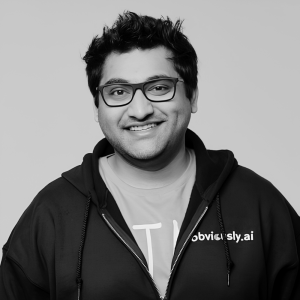
Toran Bruce Richards is a British software developer, entrepreneur, and artificial intelligence innovator widely recognized as the creator of AutoGPT, an influential open-source autonomous AI agent project launched in March 2023.
His work helped popularize the concept of agentic AI: artificial intelligence systems designed to pursue objectives through multiple connected actions rather than simply responding to individual questions.
Richards became internationally known when AutoGPT demonstrated how advanced language models could be combined with software tools, planning processes, memory, and iterative execution. The project quickly attracted attention from developers interested in building AI systems capable of performing complex digital tasks.
As the founder and CEO of AutoGPT, Richards subsequently guided the project's development toward a broader platform for creating AI-powered workflows and specialized digital assistants.
His contribution is important not because he invented autonomous agents or large language models, but because he helped make a practical implementation accessible to a global open-source development community.
Early Life and Educational Background
Toran Bruce Richards was born in March 1998 and is a British national. Public records do not establish his exact birth date or birthplace.
He developed an interest in technology, physics, simulation, and space exploration. In a public interview with OpenUK, Richards explained that he had originally considered studying astrophysics before choosing games development as a route into advanced programming and computational simulation.
He attended Edinburgh Napier University in Scotland between 2016 and 2020, graduating with a Bachelor of Science degree with First Class Honours.
Game development provided exposure to computer graphics, simulation, mathematics, interactive systems, and software engineering. These disciplines influenced the way Richards approached complex software problems.
He has described beginning university with limited programming knowledge before developing a strong interest in building software and experimenting with new technologies.
His academic background was therefore grounded in practical development rather than a traditional artificial intelligence research program.
Early Career and Software Development
Before creating AutoGPT, Richards gained experience through game development, simulation software, and independent technical projects.
His documented projects include Memory Thief, a virtual-reality gaming project, and Orbits: The Sandbox, which explored simulated physical interactions.
Following his university education, he pursued entrepreneurial software development and worked on visualization and simulation applications.
In his OpenUK interview, Richards discussed applying game-development technologies to practical problems beyond entertainment, including work involving environmental and industrial applications.
This experience introduced him to building software that interacted with complex inputs and produced meaningful outcomes.
As generative AI systems became more capable, Richards began experimenting with the possibility of using large language models as components within software applications.
His interest was not limited to generating conversational responses. He wanted to explore whether AI could perform sequences of actions that would normally require repeated human instructions.
These investigations eventually led to AutoGPT.
The Creation of AutoGPT in 2023
AutoGPT was publicly introduced on March 30, 2023, shortly after the release of GPT-4.
Richards created the original project to explore whether a large language model could operate inside an iterative software process.
Instead of receiving one instruction and producing one response, an AutoGPT agent could be given an objective and attempt to determine which actions were needed to accomplish it.
The application could generate a proposed step, execute an available tool, observe the result, and use that information to plan its next action.
This basic architecture made AutoGPT different from an ordinary conversational chatbot.
A chatbot might explain how to research a subject or organize information. An autonomous agent attempts to carry out parts of that process using connected software capabilities.
AutoGPT also explored the use of contextual memory, internet access, file operations, and interaction with external applications.
The original project was released as open-source software, making its code available for developers to examine, modify, and extend.
Its popularity helped bring experimental autonomous agents to the attention of the broader technology community.
Although earlier autonomous systems and AI planning methods already existed, AutoGPT became one of the most visible demonstrations of how generative AI could be connected to executable software workflows.
How AutoGPT Works: The Technical Innovation
The original AutoGPT architecture combined several technical concepts.
Large Language Models
GPT-family models supplied the language understanding and action-selection capabilities. They interpreted user objectives, generated intermediate instructions, and proposed next steps.
Goal Decomposition and Planning
An overall objective could be broken into smaller tasks. The software repeatedly asked the model to identify useful actions based on available information.
Iterative Execution
AutoGPT used an execution loop. After an action was attempted, its result could become part of the next model interaction.
This allowed the software to continue working through an objective rather than stopping after a single response.
Tools and External Applications
The surrounding application gave the language model access to selected capabilities, such as retrieving information, managing files, or calling software interfaces.
Memory and Context
Memory mechanisms helped retain information across interactions, although their reliability depended on the implementation and quality of retrieved information.
Human Oversight
The original software supported user authorization for actions. The degree of autonomy depended on its configuration and permissions.
These components were individually related to existing software and AI techniques. Richards's contribution was to combine them into a highly visible, reproducible experiment that attracted widespread developer participation.
AutoGPT's Rapid Open-Source Growth
Following its release, AutoGPT became one of the most closely watched projects in the emerging AI agent ecosystem.
Its GitHub repository attracted developers interested in generative AI, programming automation, autonomous workflows, and AI-assisted research.
The project accumulated more than 150,000 GitHub stars within its early period of public growth, a significant indication of developer attention.
OpenUK documented approximately 157,000 stars in its 2024 founder profile, with subsequent reports indicating further growth.
The repository also attracted contributions from engineers across the open-source community.
Developers proposed improvements to agent execution, memory handling, software interfaces, documentation, and evaluation methods.
The growing community demonstrated both the appeal and the practical difficulty of building reliable autonomous agents.
Repository stars indicate interest in a project, not the number of active users, paying customers, or successfully completed tasks.
AutoGPT's influence is therefore best understood through its visibility, accessible source code, and role in encouraging technical experimentation.
Significant Gravitas and Determinist Ltd
The original AutoGPT project became associated with Significant Gravitas, the development identity and GitHub organization connected with Richards's work.
As the project expanded, a formal commercial structure emerged.
Determinist Ltd was incorporated in the United Kingdom on May 17, 2023, under company number 14875560.
UK Companies House identifies Toran Bruce Richards as an active director of the company.
The company became associated with the commercial development and stewardship of AutoGPT.
This transition allowed the organization to pursue professional engineering, product development, infrastructure, and commercially supported AI automation.
However, the original open-source project and the commercial services developed around it should not be treated as interchangeable.
The 2023 AutoGPT experiment, the later platform, and the company's business offerings represent related but distinct stages of development.
Evolution From AutoGPT Classic to the AutoGPT Platform
AutoGPT underwent significant changes between 2023 and 2026.
AutoGPT Classic
The original software became known as AutoGPT Classic. It focused on general-purpose autonomous execution using language models and available tools.
Although influential, Classic demonstrated important limitations in reliability, operating cost, and task completion.
It is now considered legacy software rather than the main representation of AutoGPT's current commercial capabilities.
AutoGPT Forge and Agent Benchmarking
The wider ecosystem introduced development infrastructure such as AutoGPT Forge and agent benchmarking tools.
Forge helped developers experiment with building agents, while benchmarking supported more structured evaluations of agent behavior.
These projects were developed collaboratively, and their technical implementation should not be attributed exclusively to Richards.
AutoGPT Platform
On September 24, 2024, Richards announced the AutoGPT Platform.
The platform placed greater emphasis on reusable workflows, connected applications, and practical automation.
Its visual approach aimed to make AI-powered systems more accessible to users who did not want to develop every integration independently.
Agent Blocks and Specialized AI Systems
In November 2024, Richards published an article introducing the Agent Blocks approach.
Rather than depending entirely on one general-purpose agent, the concept emphasized coordinating specialized agents and modular software capabilities.
This direction reflected a growing awareness that smaller, controlled workflows could be more manageable than unconstrained autonomous execution.
Challenges and Criticism of Early AutoGPT
AutoGPT's early experiments demonstrated impressive possibilities, but they also revealed practical weaknesses.
One recurring problem was execution reliability. A model could generate a plausible plan without understanding whether every required step was technically possible.
Agents sometimes repeated operations, misunderstood instructions, or failed to recognize unsuccessful actions.
Hallucinations could affect decisions, particularly when a model received inaccurate or incomplete information.
Cost was another concern because complicated tasks could require multiple model requests.
Security risks also became important as autonomous systems gained access to files, web content, credentials, and external services.
Incorrect actions or malicious instructions embedded in retrieved information could create operational problems.
These challenges highlighted the importance of permissions, verification, monitoring, human approval, and reliable execution environments.
AutoGPT's subsequent development placed greater attention on structured workflows and controlled automation.
Its limitations also contributed to wider discussions about how agentic AI should be evaluated before use in consequential business processes.
Major Achievements and Recognition
Richards's most significant achievement is the creation and open-source release of AutoGPT.
The project helped introduce practical autonomous-agent experimentation to a global developer audience.
His work attracted coverage from technology publications, discussion among AI engineers, and interest from organizations studying the possibilities of agentic AI.
He also participated in the 2023 AI Engineer Summit, where AutoGPT's team discussed the challenges and future opportunities of autonomous AI systems.
In 2024, OpenUK featured Richards in research examining open technology innovation in the United Kingdom.
In January 2025, Richards was included in OpenUK's New Year Honours List in the open-source software maintainers category.
This recognition acknowledged his contribution to open technology. It was an OpenUK industry honour, not a UK government honour.
The recognition reflects both the project's influence and the importance of maintaining open-source software used by a broad developer community.
AutoGPT and the Broader AI Community
Although Richards created the original AutoGPT project, many developers made substantial contributions to its subsequent development.
Engineers working on the ecosystem contributed to benchmarking, safety research, infrastructure, agent frameworks, and platform functionality.
This collaborative process is an important part of AutoGPT's history.
Open-source projects develop through contributions from multiple participants, and original creators should not automatically receive individual credit for every later feature.
Richards's documented achievements include establishing the initial project, communicating its technical direction, and helping organize its evolution.
The wider community contributed the experimentation and engineering necessary to expand the software beyond the original prototype.
Toran Bruce Richards's Work in 2026
As of October 29, 2026, Richards continues to be publicly identified as the founder and CEO of AutoGPT.
The company has moved toward a platform built around specialized AI Experts and an assistant named Otto, which helps coordinate task-focused automation.
The contemporary product experience emphasizes practical activities such as research, marketing, sales support, administration, and workflow execution.
AutoGPT's official 2026 publications describe product improvements intended to make AI automation easier to understand, configure, and supervise.
Its release history also documents continuing improvements to workflow reliability, security, application integrations, and user experience.
Richards remains involved in the company's product direction, while individual engineering features are developed by the broader team.
The organization's stated ambitions include making advanced AI capabilities more accessible and useful in everyday digital work.
Impact and Legacy in Artificial Intelligence
Toran Bruce Richards occupies an important place in the history of early generative-AI agents.
AutoGPT helped demonstrate how language models could be integrated into programs that interact with tools, process feedback, and attempt multistep work.
The project also made the limitations of early autonomous agents visible to developers.
Its influence extends beyond the original application because it encouraged experimentation with planning, evaluation, orchestration, and human-supervised execution.
AutoGPT did not invent autonomous artificial intelligence, and its popularity does not prove that its earliest technical approaches were universally effective.
Its historical value lies in making an influential approach accessible and encouraging thousands of developers to investigate what practical AI agents could accomplish.
Richards's continuing leadership in 2026 connects that original experimentation with the commercial development of modern AI automation.
His career illustrates the transition from independent software experimentation to open-source collaboration and the development of products intended for real-world use.
Conclusion
Toran Bruce Richards is best known as the creator of AutoGPT and an influential figure in the early development of publicly accessible generative-AI agents.
His background in game development and simulation contributed to an experimental approach that combined language models with iterative planning and software execution.
Through AutoGPT, he helped popularize autonomous AI workflows, encouraged open-source participation, and exposed important engineering challenges in agentic AI.
As founder and CEO of AutoGPT, he continues to lead work on specialized AI agents and practical automation systems, making his career a notable chapter in the evolving history of artificial intelligence.