Marketing agencies
Longhouse and MOXIE Nashville demonstrate mixed captioning, team review, resizing and brand production. Kapwing is one part of service delivery; agencies must still manage strategy, briefs, rights and performance measurement.
 ARTIFICIAL INTELLIGENCE FILES · AI CASE STUDIES
Independent evidence review · 12 October 2026
Who used Kapwing, what changed in their editing workflow, and which results are actually documented? A research-led review of nine named customer and creator stories—without mistaking ordinary editing for AI success.

Kapwing is a browser-based video and multimedia editor founded by Julia Enthoven and Eric Lu in San Francisco in October 2017. It initially offered a simple meme maker, then expanded into editing, subtitling, shared workspaces and production tools for people who do not necessarily have professional video editing expertise. Its 2018 press release documents the founders' previous work together at Google Image Search and an ambition to simplify short-form video creation. Source: Kapwing founding account ↗
By 2026, Kapwing also offered automatic subtitles, Smart Cut, clean audio, clip repurposing, translation/dubbing, AI generation, and Kai, an assistant introduced publicly in November 2025. These capabilities do not all represent technology that Kapwing invented: Kapwing documents integrations with models from external providers. More importantly, their existence in 2026 does not prove that an earlier customer used them. Source: Kai announcement ↗ · 2026 models ↗.
| Company and product | Kapwing (AI-powered online multimedia editor) |
|---|---|
| Co-founders | Julia Enthoven (CEO) and Eric Lu (CTO), per official founding announcements |
| Founded | October 2017 |
| Headquarters / founding context | San Francisco, California, United States |
| Industry | Video editing, creator software, multimedia collaboration, AI-assisted creation |
| Funding publicly announced | $1.7 million seed in 2018; $11 million Series A in 2019. These are historical company financing rounds, not case-study ROI. |
| Official website | kapwing.com |
| Principal evidence archive | Nine named customer stories ↗ |
Founders and product strategy. Enthoven and Lu moved from conventional multimedia complexity toward an accessible, browser-first workflow. Their company went on to add automatic editing and AI features. Their contribution is developing the platform, teams, and creative workflows; it is not evidence they originated the third-party foundation models used by Kai. As examples below show, customers often value review, templates, easy exporting and collaboration as much as generative AI itself.
Every featured name appears in Kapwing's official Customer Stories archive. Where possible, this research identifies the actual interviewee, business challenge, workflow, feature and outcome. Evidence level is narrower than marketing language: direct customer statements reproduced by Kapwing are customer-reported, published by the vendor. They are valuable but are not equivalent to an independent audit or controlled before-and-after experiment.
A named customer explicitly uses Smart Cut, automatic subtitles, Clean Audio or a comparable AI-powered function. These features can still operate inside a broader, mostly manual editing workflow.
The customer uses templates, timeline cuts, recording, resizing or collaboration, but the interview does not establish AI use. The case is real; it is not proof of AI-specific business value.
A figure must carry the date, denominator or missing denominator, who reported it and whether it is output, audience growth, turnaround, or business results—not a mixture.
Source hierarchy: official customer interviews and dated customer stories; corroborating named customer material where accessible; official release notes for feature availability; analysis labeled separately. We excluded product demonstrations, generic marketing examples and customer logos without a supporting implementation story.
All nine entries below are named, dated examples from the official archive. The columns explicitly state when AI use is supported and when it is not.
| Customer | Industry | Verified workflow | Result / evidence | Classification |
|---|---|---|---|---|
| Longhouse Media | Marketing and advertising | Verified hybrid: AI-assisted subtitles and trimming plus conventional editing | 43% video-production business growth; 22% overall business growth (customer/vendor-reported) | Hybrid — specific AI tools documented |
| Share.One | Customer testimonials and video services | Verified hybrid: AI-powered subtitles, Smart Cut and cloud collaboration | 4–5 business days to as little as 1 day turnaround (customer-reported) | Hybrid — specific AI tools documented |
| National University — Project Access | Higher education | Mixed workflow: editing, collaboration, recording and Clean Audio; no proof of generative AI | About 65 faculty-reviewed videos; 120 editing; 350 awaiting editing | Hybrid / primarily general editor |
| Brandon Arvanaghi / Meow | Fintech founder and thought-leadership marketing | Verified hybrid: automatic captions alongside trimming and shared review | LinkedIn audience from nearly 0 to 85,000 followers by 2024 | Hybrid — captions confirmed |
| Vannesia Darby / MOXIE Nashville | Marketing agency and content services | Verified hybrid: auto-subtitles, Smart Cut, resize and cloud collaboration | Qualitative faster jump-cut editing; no numerical hours or ROI | Hybrid — specific AI tools documented |
| Earl Hall / Earl Hall Studios | Creator coaching and video podcasts | Verified AI use: Smart Cut and auto-generated captions | 4–5 long-form pieces per week reported; not established as Kapwing-generated growth | Hybrid — specific AI tools documented |
| David Block / Guarda | Fintech and community marketing | General Kapwing usage; no verified AI-specific capability | No quantified Kapwing-linked outcome | General editor — AI not established |
| Richard Cooper / rjcfraser | Business English education | General Kapwing editor usage; no identified AI feature | Approximately two daily social creations reported; no audited follower increase | General editor — AI not established |
| Chef Marshall O’Brien | Wellness education and food content | General video resizing and templating; no verified AI-specific implementation | About 70 content pieces per week reported vs personal goal of 50 | General editor — AI not established |
Interpretation: These values have different denominators. Longhouse's percentage is growth of a service business, Share.One's figure is a best-case production interval, National University's figure is project output and Brandon's figure is audience size. They must never be summed or converted into an average Kapwing ROI. This research did not locate sufficient cost, control and value data to calculate a defensible cross-company return on investment.
| Customer | Before | After / snapshot | Causality |
|---|---|---|---|
| Share.One | Four to five business days | As little as one day | Customer links faster workflow to cloud collaboration and editing; AI-only contribution unknown |
| Longhouse Media | Numerical baseline undisclosed | 43% video-service growth and 22% business growth reported | Observed after adoption; no controlled attribution |
| National University | No numeric productivity baseline | 65 reviewed, 120 editing, 350 awaiting editing | Output status, not an improvement ratio |
| Brandon / Meow | Nearly zero LinkedIn followers in 2022 | 85,000 followers by the 2024 case story | Audience growth involves content, distribution and other factors |
| Marshall O'Brien | Personal weekly target of 50 pieces | Reported production of about 70 pieces per week | Target versus output, not pre/post adoption |
Each account follows customer context → challenge → product choice → documented workflow → output → measurable or qualitative outcome → evidence limitation. Historical tools are described according to the period of each case.
A Canadian agency offering marketing and short-form video services needed a more efficient way to serve clients as demand shifted toward Reels, TikTok, and YouTube Shorts. Its previous long-form editing workflow created unnecessary delays for short projects.
Heavy editing tools had become a bottleneck for fast-turnaround, brand-specific short videos. Longhouse had to produce assets for varied clients without letting editing delays affect planning, filming, or customer delivery. Its case study does not name a precise historical cost or production-time baseline.
The team said Kapwing combined an approachable browser editor, built-in templates, collaboration, automatic subtitles, stock assets and a brand kit. Onboarding was comparatively straightforward. The agency also valued automation of repeated tasks such as captioning and trimming.
Footage and creative briefs entered a shared team editing process; editors used Kapwing to trim and adapt clips, generate and style captions, find supporting media, apply brand colors and type, review with teammates, then export short-form social content and ads. The public account describes these steps but does not publish a minute-by-minute production log.
Vertical video deliverables for client social channels, client testimonial clips and the agency’s own short-form promotional advertising.
Kapwing’s November 2023 story reports a 43% expansion in the agency’s video-production side and 22% overall business growth after adopting the platform. It does not provide denominators, audited financial statements, cohort definition, or an exact timeframe for each metric. These percentages describe business changes, not an AI model benchmark or isolated effect of subtitling.
Evidence limitation: No independent audit, no per-video before/after time, and no experiment isolating the contribution of AI features.
Source: Kapwing original interview / story ↗ · Publisher: Kapwing · Date: 20 November 2023 · Evidence: customer testimony published by the vendor (not independently audited).
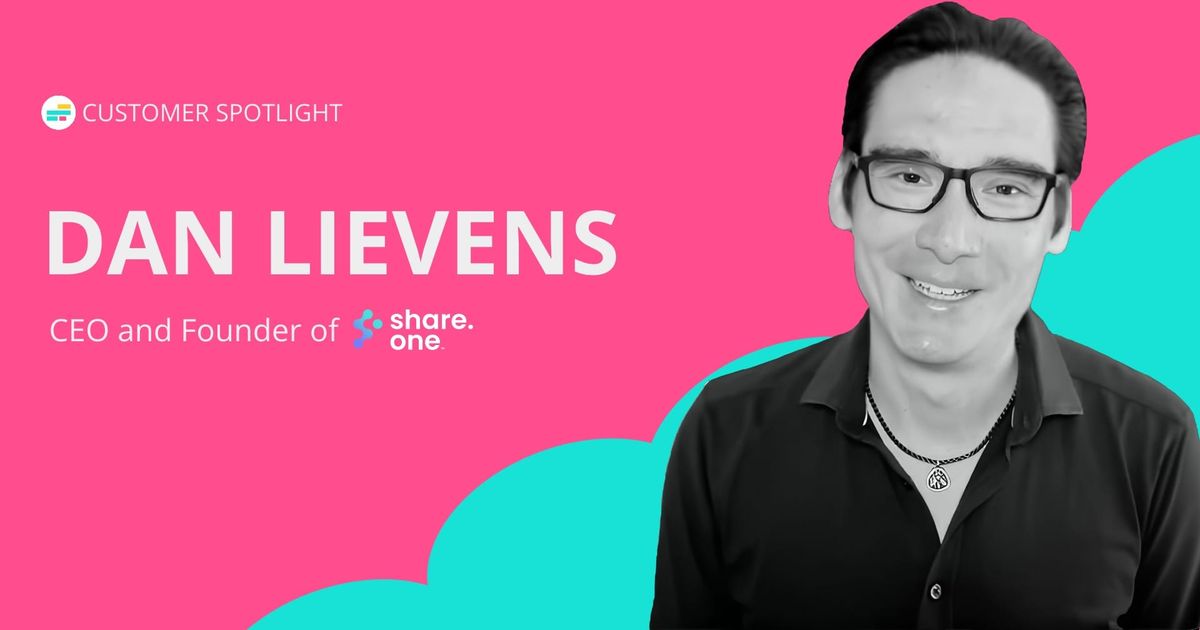
Share.One, founded by Dan Lievens, produces affordable video testimonials for business clients with contributors across the United States, Philippines and Colombia. Remote delivery meant that footage and revisions had to move between people in different time zones.
Its previous workflow combined Riverside recording, Final Cut Pro, Adobe Premiere Pro, Frame.io and Google Drive. Moving large files between editing, storage, feedback and delivery created delays. The distributed team could sometimes wait roughly a day for relatively small subtitle fixes.
Share.One selected Kapwing for a cloud-accessible project workspace where multiple staff members could correct captions or make edits without transferring the whole project to different systems. The customer story also names AI subtitling and Smart Cut as available functions used in the workflow.
The team collects recorded testimonials, brings footage into its shared Kapwing workflow, corrects text and subtitles, removes pauses when useful, reviews remotely and exports the final testimonial for clients. Recording tools and client approval still require people; the platform is not portrayed as making an authentic testimonial without a real speaker.
Customer testimonial videos produced for client businesses. The story says the operation serves more than 200 businesses and handles hundreds of videos weekly, but those are vendor-published, historically dated operating descriptions, not independently verified current customer counts.
Dan Lievens reported that projects that formerly took four or five business days could now be turned around in as little as one day. This is a customer-reported best-case turnaround, not necessarily the average for every video. His account directly links the efficiency to cloud review and reduced file transfers along with faster editing.
Evidence limitation: No audited cost reduction or consistent median turnaround, no independently verified attribution of the entire speed-up to AI.
Source: Kapwing original interview / story ↗ · Publisher: Kapwing · Date: 16 December 2024 · Evidence: customer testimony published by the vendor (not independently audited).

The university’s Project Access team wanted students in online courses to receive guidance from students who had already completed those courses. The broader project was linked to a five-year U.S. Department of Education grant focused on Hispanic student success; that grant is not a Kapwing award or claimed Kapwing ROI.
Project members described difficulty creating community for students attending remotely and at different times. Student editors also found CapCut confusing and insufficiently collaborative for the cross-person editing workflow they needed.
The team chose Kapwing for an approachable timeline editor, shared collaboration, and a repeatable process that student contributors could learn without specialist post-production experience. They used templates and assembled English- and Spanish-language guidance clips.
A previous student records guidance about a course; editors use intro/outro templates and the split tool, add stickers or B-roll, sometimes record within Kapwing, use Clean Audio where helpful, and move finished videos through faculty review. The project describes five videos in English and five in Spanish per course set.
As of the February 2025 interview, the team reported about 65 faculty-reviewed guidance videos, about 120 videos being edited, and about 350 in need of editing. Those numbers describe pipeline status—not 535 completed videos or a learning-outcome increase.
Members said they could move between projects more easily and complete reviews faster. They explicitly stated that they did not have numerical before/after improvement data. The interview does not establish that retention, grades, or completion increased because of Kapwing.
Evidence limitation: Production counts are customer/brand-reported, not a controlled estimate of time savings; student learning outcome causality is unavailable.
Source: Kapwing original interview / story ↗ · Publisher: Kapwing · Date: 19 February 2025 · Evidence: customer testimony published by the vendor (not independently audited).
Brandon Arvanaghi, co-founder of financial technology business Meow, wanted to publish short thought-leadership videos regularly while keeping a lean marketing operation. He initially prepared material largely alone.
A goal of posting a 30-second clip daily was hard to sustain when conventional editing made trimming and captioning disproportionately time-consuming. Hiring a full editing team was not a workable default for the early operation.
After testing editors, Brandon selected Kapwing for browser access, fast trimming, caption presets and straightforward collaboration. The account later describes working with three teammates in a shared workspace.
Select a longer interview or leadership clip, import it, shorten to a digestible extract, add automatic captions, apply suitable text styling, review with team members, export and publish to LinkedIn or X. His team also experimented with talking-head videos and overlays.
Recurring short leadership and commentary videos published under the founder’s professional account. Posts served audience-building and awareness rather than a disclosed paid acquisition campaign.
The August 2024 company interview reports growth to 85,000 LinkedIn followers from nearly zero. Brandon associated the content routine with wider business visibility and outreach responses. However, the account does not isolate Kapwing’s contribution to follower gain, and it must not be reported as “85,000 followers generated by AI.”
Evidence limitation: No controlled comparator, editing hours quantified, or proof of direct causal relationship between the editor and follower growth.
Source: Kapwing original interview / story ↗ · Publisher: Kapwing · Date: 9 August 2024 · Evidence: customer testimony published by the vendor (not independently audited).
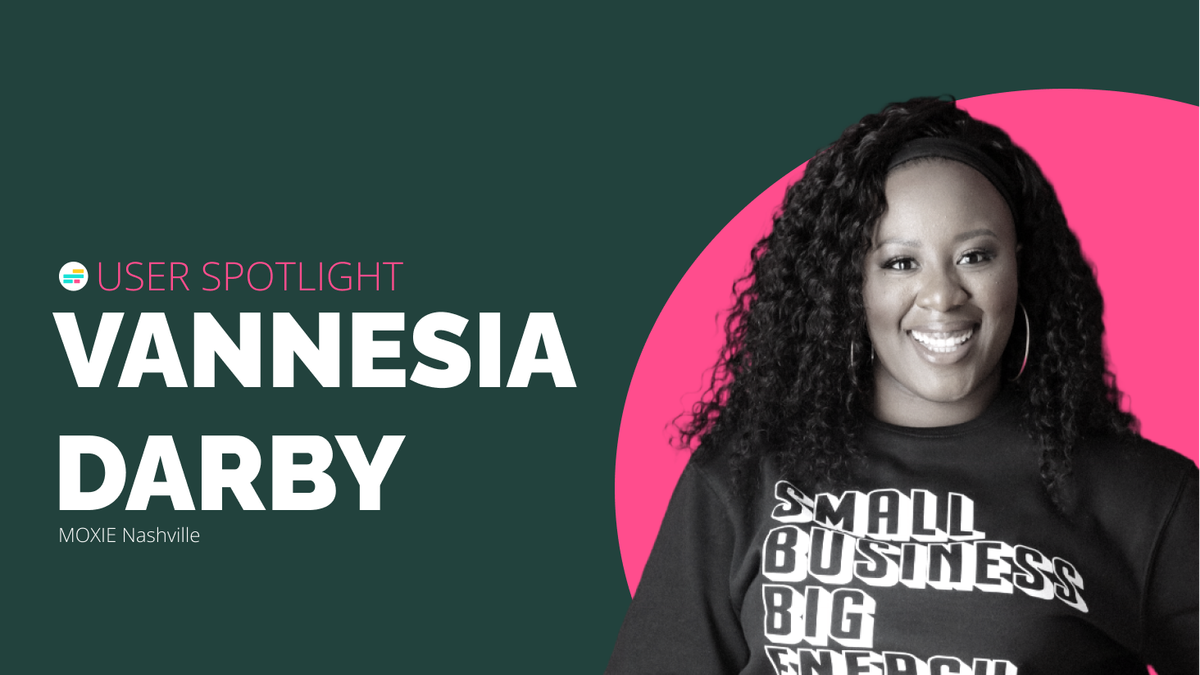
Vannesia Darby founded MOXIE Nashville, a marketing agency supporting creative campaigns and social-media strategy. Client work increasingly required videos adapted for platforms that favor vertical and short-form formats.
Social-media managers were taking on video-editing tasks alongside design and strategy. Vannesia needed reliable subtitles, format changes, jump cuts and review with remote contractors without forcing every collaborator into a heavyweight editing setup.
She found Kapwing through search for a free video caption tool, initially used automatic subtitles, then upgraded to remove a watermark and adopted resizing, logo overlays, blurred-background formats, Smart Cut and Kapwing Teams.
Record or import existing promotional footage, apply subtitles, resize the material for the target platform, add customer branding, remove silence or create jump cuts with Smart Cut, and share the project with contractors for feedback and edits.
Repurposed social-media videos, captioned edits and short-form promotional material. The story identifies individual social examples but does not contain a valid revenue or engagement baseline.
Vannesia said Smart Cut saved time and cloud projects made working with designers easier. Those are direct customer testimonials without published minute-level measures. No numerical revenue growth can responsibly be attributed to the tool.
Evidence limitation: No precise volume, client revenue, percentage time savings, or independent verification of improved outcomes.
Source: Kapwing original interview / story ↗ · Publisher: Kapwing · Date: 21 September 2022 · Evidence: customer testimony published by the vendor (not independently audited).
Earl Hall produces podcasts, instructional content and marketing assets and coaches other creators. The documented workflow spans long-form video and repurposed short clips for several platforms.
Manually locating silences and breaths in long recordings was repetitive even for someone familiar with waveforms. His small team also had to send project exports back and forth when working in older editing software.
Kapwing offered an intuitive browser editor with Smart Cut, auto-captions, resizing and team workspaces. The customer narrative says Earl had previously used Adobe Premiere and WeVideo for editing.
Create or record a podcast, place it in a shared editing project, use Smart Cut to identify and remove silences, make further editorial cuts, add generated captions and resize selected highlights into social formats; teammates can review the same workspace.
Long-form podcast and coaching content plus short video derivatives. The customer story states a small team was producing four to five long-form content pieces per week, but does not show a before/after baseline.
Earl describes faster removal of silence and simpler collaboration. No verified production-cost figure or controlled change in output can be calculated from the case.
Evidence limitation: Weekly output is context, not a causal Kapwing gain; quantitative time savings are not disclosed.
Source: Kapwing original interview / story ↗ · Publisher: Kapwing · Date: 14 September 2022 · Evidence: customer testimony published by the vendor (not independently audited).
David Block worked in community and content marketing for Guarda, a crypto-wallet business, and used meme language to make unfamiliar fintech topics approachable.
He needed quick access to adaptable meme formats and the ability to record, edit audio, add music and turn longer interview videos into short clips. He had encountered friction with other programs before using Kapwing.
Kapwing’s meme templates and accessible general media tools matched frequent, reactive content creation. David discussed using current templates and short clips to explain technology to social audiences.
Choose a relevant meme template or piece of interview footage; edit its visual and audio components; prepare social-native content; publish to the brand’s communities. The interview does not verify which AI model, if any, was used.
Memes, GIFs and cut-down video pieces related to fintech education and announcements.
The story records anecdotal enthusiasm and a qualitative marketing workflow. Its reference to creating 60–120 memes per day relates to David’s earlier employment and must not be represented as Guarda’s output or a result from Kapwing.
Evidence limitation: General platform usage confirmed; attribution of AI impact or campaign conversion is unavailable.
Source: Kapwing original interview / story ↗ · Publisher: Kapwing · Date: 1 October 2022 · Evidence: customer testimony published by the vendor (not independently audited).
Richard Cooper ran rjcfraser, a business-English coaching practice, using short videos, memes and social posts to make communication topics more relatable.
Text-only posts can be difficult to distinguish in social feeds. Richard wanted convenient access to sound, pictures and video clips for educational posts without switching among numerous services.
Kapwing’s libraries and basic visual editing made it easier for him to combine educational messages with visual references.
Select a communication theme, assemble imagery/audio/video inside Kapwing, create a short post, then publish on professional social media. The story describes publishing two creations per day at the time.
Short educational clips and memes for business English audiences.
The vendor interview says Richard saw more followers and collaboration opportunities, but does not provide validated before/after counts. This should not be misreported as a proven AI engagement increase.
Evidence limitation: No feature-specific AI evidence; no independently verified engagement or student-outcome data.
Source: Kapwing original interview / story ↗ · Publisher: Kapwing · Date: 30 September 2022 · Evidence: customer testimony published by the vendor (not independently audited).
Chef Marshall O’Brien used social content to explain nutrition and support a wellness education business that works with individuals and corporate groups.
Content needed to be adapted across several social platforms while keeping a recognizable approach to food and wellness teaching. Repetitive formatting increased the effort of republishing.
Kapwing let him reuse a familiar template, rotate text or media, and resize output for the intended format.
Start with a recurring template, add food/wellness images or quotes, assemble the post and resize for different feeds before downloading it for distribution.
Educational social media posts and short videos about healthier eating and lifestyle habits.
Marshall reported that while his goal was 50 weekly content pieces, he was producing around 70. The published interview does not provide a pre-Kapwing comparison; this is a snapshot of personal production, not a calculated 40% Kapwing productivity gain.
Evidence limitation: AI feature usage not established; results are self-reported and lack comparative baseline.
Source: Kapwing original interview / story ↗ · Publisher: Kapwing · Date: 30 September 2022 · Evidence: customer testimony published by the vendor (not independently audited).
Kapwing's tools now span several technical categories. Automatic subtitles rely on speech recognition, Smart Cut can detect silence and remove it, Clean Audio processes recordings, while newer AI generation functions involve prompts and external generative models. The distinction matters because the product was substantially different in 2022 from the Kai-led environment launched in late 2025.
| Capability | Documented customer | What is proved | What remains unproved |
|---|---|---|---|
| Automatic subtitles / captions | Longhouse, Share.One, Brandon, MOXIE, Earl | Named customers used caption automation in editing | Specific ASR provider, accuracy, independent minutes saved |
| Smart Cut / silence removal | Share.One, MOXIE, Earl | Used or specifically cited AI-assisted trimming | Per-minute time saving or absolute editing quality |
| Clean Audio | National University | Used to reduce recording noise in its 2025 workflow | Student success causality or measured noise-quality improvement |
| Browser collaboration and Brand Kit | Longhouse, Share.One, Brandon, National University, MOXIE, Earl | Shared teams/templates were valuable | These capabilities are not proof of generative AI |
| AI dubbing, translation and lip-sync | No strong named case in nine reviewed stories | Contemporary Kapwing product functionality is documented | A specific customer's measured result from these features |
| AI script / image / video generation | No verified usage in historical nine customer stories | Offered in 2025–2026 Kai platform | Named historical customer deployment and business ROI |
| Kai agent, external video models | No case-specific attribution from original archive | Company announced Kai in Nov 2025, models and agent updates in 2026 | 2022–2024 case outcomes caused by later launches |
Generating an image, scene, voice or soundtrack from a prompt is different from making an existing video faster to subtitle or trim. A customer can obtain substantial business value from a hybrid workflow without generating a single synthetic frame. It would be misleading to assign Longhouse's 43% expansion entirely to generative video, or to claim National University's educational videos used 2026 models not available at interview time.
Kapwing announced Kai as a creative AI assistant in November 2025, with layered projects editable in its Studio. In April 2026, release notes listed choices including WAN 2.2, GPT Image 1.5 and Meta's Segment Anything tooling; the August 2026 notes described agent autonomy and reference-asset improvements. These are company-reported product developments, not independent demonstrations of customer ROI. The company also acknowledges integrations with outside model providers, so users should not assume each model is proprietary to Kapwing. Kai announcement ↗ · April 2026 notes ↗ · August 2026 notes ↗
Longhouse and MOXIE Nashville demonstrate mixed captioning, team review, resizing and brand production. Kapwing is one part of service delivery; agencies must still manage strategy, briefs, rights and performance measurement.
National University and Richard Cooper used the editor for accessible guidance and teaching posts, respectively. The former produced a tracked video pipeline; neither source substantiates higher grades or verified test-score changes.
Brandon Arvanaghi provides a real example of repeatable captioned founder videos. Strong audience growth occurred, but customer acquisition causality is not isolated from the content strategy and wider distribution.
Share.One and Earl Hall show how shared media access, silence removal, captions and clip repurposing reduce workflow friction. For Share.One, the clearest comparable measure is the reported project turnaround.
Chef Marshall O’Brien used reusable media layouts and resizing to support frequent public communication. This is confirmed editor usage, not a documented generative-AI deployment.
David Block at Guarda used meme templates and clip editing for social communication. The story supports a creative workflow but not quantified conversion, AI model use, or incremental financial outcomes.
Research gap — ecommerce and enterprise AI generation: these sectors offer plausible applications, but the nine archived customer stories do not establish named Kapwing ecommerce deployments using AI generation or audited enterprise productivity results. Do not publish such claims without additional customer evidence.
The following is a broad category comparison, not a customer-switching case study or a ranking. Different services overlap in captions, recording, editing and generation; the right choice depends on a team's own test footage, collaboration needs and review requirements.
| Platform | Relevant focus | Typical overlap with Kapwing | Consideration |
|---|---|---|---|
| VEED | Online video editor and AI production tools | Captions, dubbing, browser editing and team content | Compare language quality, governance and seat/credit costs on a real project |
| Descript | Audio/video and transcript-based editing | Transcription, podcast editing, clips, speech cleanup | Test transcript quality and timeline flexibility |
| Canva | Multi-format design and social content tools | Templates, brand assets, simple video and AI tools | Compare depth of editing versus general design workflows |
| InVideo AI | Prompt-based video assembly and AI generation | Script-to-video, creator content, short promotional clips | Check editability and source-asset handling |
| Runway | Generative video and visual creative controls | AI-generated shots for videos | Compare generated media control rather than just timeline tools |
| Adobe Express | Lightweight branded content and integrated creative workflows | Social formats, templates, brand controls, video | Evaluate integration into existing Adobe workflows |
Source boundary: the comparison is functional analysis rather than a verified claim that any featured customer trialed all these platforms. In the primary stories, Share.One documents a previous multi-tool stack, National University reports previous CapCut use, and Earl Hall mentions Adobe Premiere and WeVideo. Customer-specific competitor claims elsewhere would require separate evidence.
Automatic captions can mishear technical terms and names; silence removal can remove an intentional pause; translation and dubbing may misrepresent tone. A human should approve material before it represents a university, client or professional.
As of the 12 October 2026 check, Kapwing lists Free, Pro, Business and Enterprise plans. Paid AI minutes and credits have restrictions. Always confirm regional price, exports and seats at official pricing ↗ before committing a production team.
Customer testimonials require speaker consent. Educational recordings can contain student information. Staff should confirm the platform's current terms and privacy controls, establish who may upload footage, and avoid exposing sensitive material unnecessarily.
Followers, revenue, content volume and editing speed move for many reasons. A tool may help, but teams need baseline timings, quality review, control samples and consistent reporting to make causal claims with confidence.
Practical review checklist: keep original recordings, test caption error rates, review consent and music licensing, preserve a human approval stage, monitor processing failures and record the true number of finished—not just drafted—assets.
Confirmed developments: Kapwing announced Kai in November 2025; the 2026 release notes show continued development of agentic editing, model selection, media references and improvements to multi-step creative workflows. Kapwing names third-party video and image models within its product documentation. Primary announcement ↗ · August 2026 updates ↗
Research analysis (not a company roadmap): creative platforms may increasingly connect text instructions with editable timelines, brand kits, localization and approvals. Whether that creates sustained business advantage depends on consistent output quality, model economics, security, creator control and measurable retention—not on feature breadth alone.
Kapwing is an online multimedia editor with AI-assisted captioning, editing and generation. Its newer Kai assistant helps users create or modify editable media projects. Earlier customer cases commonly involve conventional timeline work mixed with automation.
Julia Enthoven and Eric Lu founded the company in October 2017 after working together at Google. The original product was a browser-based meme maker, not a generative AI video model.
Named customers use Kapwing to make short videos, edit testimonials, create captions, review drafts and prepare social content. Some cases explicitly use Smart Cut or automatic subtitles, while others only establish standard editing.
Official documented examples include Longhouse Media, Share.One, National University, Brandon Arvanaghi, MOXIE Nashville and Earl Hall. Their published outcomes differ in type and measurement quality.
Longhouse Media and MOXIE Nashville report using captions, short-form editing, resizing, branding and team collaboration for client content. They still rely on human creative planning, review and distribution.
Customer interviews describe less repetitive work and faster revisions. Share.One reported a turnaround reduction from four or five business days to as little as one day, but that outcome covers cloud collaboration as well as editing automation.
Current Kapwing tools include automated subtitles, Smart Cut, Clean Audio, repurposing, AI dubbing and Kai-based media generation/editing. Availability and credit limits depend on the current plan and feature.
National University's Project Access used it to create peer-to-peer course guidance in English and Spanish. The case includes production pipeline counts but no independently quantified changes in grades or retention.
Yes. Automatic subtitles were explicitly referenced by Longhouse, Share.One, Brandon, MOXIE Nashville and Earl Hall. Captions should still be reviewed for terminology, names and timing.
Kapwing has officially announced AI dubbing and translation, but the nine historical customer stories reviewed here do not establish a strong named customer outcome from modern dubbing workflows.
Marketing agencies, creators, educational teams and testimonial-video providers have the clearest named case evidence in Kapwing's official archive. Evidence for ecommerce-specific AI video campaigns remains limited.
Examples include 43% growth in Longhouse's video-production business, one-day best-case Share.One turnaround, 65 faculty-reviewed National University videos, and Brandon's 85,000-follower LinkedIn audience. These are not interchangeable metrics.
Users need internet access, may encounter quality or credit limits, and must review AI-generated content for errors, privacy issues, rights and brand fit. Results cannot be assumed to generalize to every team.
Both provide browser-based video editing and AI-assisted workflows. Their detailed capabilities, limits, pricing and collaboration fit should be compared on a representative production task rather than a generic best-platform ranking.
Start with the slowest recurring task, keep a human quality check, use consistent templates and shared projects, and collect real before-and-after data before claiming tool-driven business gains.
Research cutoff: 12 October 2026. Nine published, named stories were reviewed. Quantitative figures are customer statements published by Kapwing unless explicitly noted otherwise. No independent ROI audit, fixed average time-saving figure, or controlled causal study was located in this set.
Image attribution: The logo uses an Artificial Intelligence Files URL previously supplied for the Kapwing founders article. The founder photograph appears in a Kapwing founder essay. Longhouse, Share.One, National University and Vannesia customer spotlight images come from the Kapwing Resources site and are displayed with descriptive alt text. Public availability does not establish publication permission. Confirm licensing/attribution or obtain permission before using on a public site.
Unverified or unavailable: independently audited ROI; exact baseline units for Longhouse business growth; mean time-to-delivery for Share.One; direct student outcome changes at National University; a controlled explanation of Brandon's follower gain; company-specific evidence that historic customers used Kai or generative foundation models introduced after their original interviews.
Research other video creation platforms through Artificial Intelligence Files, or compare these customer accounts with Kapwing's original stories before choosing a workflow for your organization.