
OpenAI Logo
OpenAI AI Research & Products Company
AI Company Spotlight

Meet OpenAI, the lab that gave the world ChatGPT.

OpenAI is one of the most talked-about companies on the planet. It builds AI tools that millions of people use every day — to write, code, draw, and think. Here's the whole story, in plain and simple words.

The basics

What exactly is OpenAI?

OpenAI is an American technology company based in San Francisco. Its main job is to build and research artificial intelligence — machines that can think, talk, write, and create like humans. It was started in 2015 as a non-profit, which means its original goal was not to make money, but to make AI that helps everyone on earth.

Its most famous creation is ChatGPT, a chatbot you can talk to like a real person. ChatGPT can answer questions, help with homework, write stories, fix code, translate languages, and so much more. By late 2025, more than 800 million people were using it every week — roughly one in ten adults on the whole planet.

Over time, OpenAI changed its structure. In 2025, it became a public benefit corporation (PBC) — a business that must balance making money with doing good for society. The old nonprofit arm, called the OpenAI Foundation, still watches over everything to keep the company on its original mission.

🏢Quick Facts
FoundedDecember 2015San Francisco, USA
TypePublic Benefit CorpOverseen by OpenAI Foundation
CEOSam AltmanCo-founder & CEO
PresidentGreg BrockmanCo-founder
Flagship productChatGPT800M+ weekly users
Key backersMicrosoft · SoftBank · Nvidia& many more
Valuation~$500 billionAs of Oct 2025
800M+
Weekly ChatGPT users (Oct 2025)
$500B
Company valuation
$13B
Projected revenue 2025
2015
Year founded as a nonprofit
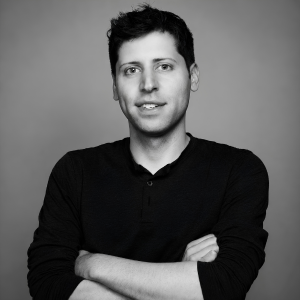
Sam Altman — Co-founder & CEO of OpenAI Co-founder & CEO
Meet the leader
Sam Altman
Chief Executive Officer, OpenAI

Sam Altman is the co-founder and CEO of OpenAI. Before OpenAI, he ran Y Combinator, one of the world's most famous startup accelerators. He co-founded OpenAI in 2015 alongside Elon Musk, Greg Brockman, and others. In November 2023, OpenAI's board briefly removed him as CEO, but he was reinstated just five days later after massive support from employees and investors. Today he leads the company's effort to build what he describes as a "team of PhD-level experts in your pocket."

Why the buzz

Why is everyone talking about OpenAI?

In just a few years, OpenAI went from a quiet research lab to the most valuable private tech company in history. Three big things put it in the spotlight — and kept it there.

🌍

ChatGPT changed everything

When ChatGPT launched in November 2022, it became the fastest-growing app in history — hitting 1 million users in just five days. It showed the world that AI could hold a real conversation and genuinely help with everyday tasks.

Game changer
💰

Enormous investment & valuation

Microsoft invested $10 billion in 2023. Then in March 2025, OpenAI raised $40 billion in a single round — the largest private tech funding in history — pushing its value past $300 billion and eventually $500 billion.

Record-breaking
🧠

Non-stop new releases

OpenAI kept surprising people: GPT-4, DALL-E 3, Sora (AI video), GPT-5 in 2025 — each release pushed what AI could do a little further. There's always something new to talk about.

Always innovating
The products

What does OpenAI actually make?

OpenAI has built a whole family of AI tools. Some are for talking and writing, some are for images, and some are for video and code. Here's a tour of the main ones.

💬

ChatGPT

The world's most popular AI chatbot. You type a question or request, and ChatGPT replies in seconds — like texting a very smart friend who knows about almost everything. It can write essays, plan trips, explain science, and debug code.

800M+ weekly users

GPT-5

OpenAI's most powerful AI brain, released in August 2025. Sam Altman described it as like having "a team of PhD-level experts in your pocket." It scores higher than almost any other AI on coding, reasoning, and knowledge tests.

Latest & smartest
🎨

DALL-E

Type a description — like "a cat wearing a spacesuit on the moon" — and DALL-E draws it for you in seconds. It's been used for book covers, advertising, art, and just for fun. A huge leap for creative AI.

Image generation
🎙️

Whisper

OpenAI's speech recognition tool. It can listen to audio and turn it into written text, or translate spoken words across 99 different languages — great for meetings, podcasts, and accessibility.

Speech to text
💻

Codex & GitHub Copilot

OpenAI's Codex model powers GitHub Copilot — a tool millions of programmers use. It suggests lines of code as you type, helping developers write software faster and with fewer mistakes.

For developers
🔌

OpenAI API

Developers and businesses use the OpenAI API to add AI abilities to their own apps. From customer service bots to document summarisers, thousands of products are built on top of OpenAI's models.

Platform
The mission

Is OpenAI focused on safety?

OpenAI says its core mission is making sure AI is safe and benefits all of humanity. In practice, here's what that looks like:

  • AGI for everyone. The founding goal is to build Artificial General Intelligence — AI as smart as a human — and share it fairly with the world, not lock it behind a paywall.
  • Public benefit structure. In 2025 OpenAI became a public benefit corporation — legally bound to consider society's good, not just shareholder profit.
  • Safety research teams. OpenAI runs ongoing research into how AI might behave badly, and trains its models to avoid harmful content, deception, and bias.
  • Usage policies. OpenAI publishes rules about what ChatGPT can and can't be used for — helping prevent misuse for things like spreading disinformation.
  • Transparency reports. The company shares research papers and model cards so the public understands how the AI was built and tested.
The journey

OpenAI's story, year by year

From a small nonprofit to the world's most discussed AI company — a clear timeline of the big moments.

2015

Born in a living room

OpenAI is founded in December by Sam Altman, Greg Brockman, Elon Musk, Ilya Sutskever, Wojciech Zaremba, John Schulman and others. Early meetings were held in Greg Brockman's living room. They pledge $1 billion to the nonprofit and vow to share research openly with the world.

2018–2019

GPT is born & the for-profit pivot

OpenAI releases GPT-1 in 2018, showing that AI can understand and generate surprisingly human-like text. In 2019 it creates a "capped-profit" company to attract investors while keeping the nonprofit in charge. Elon Musk leaves the board, later becoming a vocal critic.

2020

GPT-3 wows the world

GPT-3 launches as one of the most powerful language models ever seen. Developers get access via API and begin building thousands of AI-powered apps. Microsoft secures exclusive access to GPT-3's underlying code.

2021

DALL-E & Codex arrive

DALL-E shows people that AI can create images from text descriptions. Codex, a model fine-tuned for programming, powers GitHub Copilot and helps millions of coders write software faster.

2022

ChatGPT takes the internet by storm

ChatGPT launches in November 2022 and becomes the fastest consumer app to reach 1 million users — in just 5 days. Within two months it has 100 million monthly users. The AI era enters mainstream culture.

2023

GPT-4, Microsoft billions & the CEO crisis

GPT-4 launches with image understanding and far better reasoning. Microsoft announces a $10 billion investment. In November, the board fires Sam Altman — then rehires him five days later after almost all employees threaten to quit.

2024

Sora, GPT-4o & $6.6 billion raise

OpenAI previews Sora, an AI that generates realistic videos from text prompts. GPT-4o brings voice, vision, and text together in one model. OpenAI completes a $6.6 billion fundraise at a $157 billion valuation.

2025

GPT-5, record funding & $500B valuation

OpenAI raises $40 billion in March — the largest private tech round in history. GPT-5 launches in August to huge praise. The company restructures as a public benefit corporation. ChatGPT surpasses 800 million weekly users. Valuation climbs to $500 billion.

Backers

Who funds OpenAI?

Some of the biggest names in technology and finance have invested in OpenAI, believing it will shape the future of computing.

🪟
Microsoft
~$13B invested · 27% stake
📱
SoftBank
Lead investor in 2025 raise
🟢
Nvidia
Strategic partner & investor
🏦
Thrive Capital
Key early-round backer
What they believe

OpenAI's guiding ideas

Everything OpenAI does is meant to serve its founding mission. Here are the core principles that guide its decisions, put in plain language.

01

AGI for all humanity

Build the world's most capable AI — then make sure its benefits reach everyone, not just the wealthy or powerful.

02

Safety first, always

Never release an AI system without studying its risks. The faster AI gets, the more carefully it must be tested.

03

Open research

Share what you learn with the world. Publishing safety research helps everyone — not just OpenAI — build AI more responsibly.

04

Long-term thinking

Avoid shortcuts that feel good now but could cause harm later. The goal is a future where AI and humans genuinely thrive together.

05

Honest and direct

ChatGPT is designed to admit when it doesn't know something, avoid making things up, and say "I'm not sure" rather than guess.

06

Commercially responsible

Revenue funds the research mission. Making money isn't the goal — it's the fuel that pays for the very expensive work of building safe AGI.

Challenges & debates

OpenAI hasn't been without controversy

Every fast-moving company faces hard questions. OpenAI has had several public debates and struggles worth understanding.

🔥 The Sam Altman board crisis (2023)

In November 2023, OpenAI's board suddenly fired CEO Sam Altman, citing a loss of trust. Within five days, almost all employees signed a letter threatening to quit if he wasn't brought back. He was reinstated, and the board was restructured. It showed the tension between OpenAI's mission-driven governance and its fast-growing commercial side.

⚖️ Elon Musk's lawsuit

Elon Musk, an original co-founder, sued OpenAI in 2024, claiming it had abandoned its nonprofit mission by partnering closely with Microsoft and chasing commercial profits. A jury ruled against Musk, finding his claims were filed too late. OpenAI says the commercial growth funds its safety mission.

📰 Copyright lawsuits from publishers

In 2023 and 2024, authors, news organisations and media companies sued OpenAI, claiming it used their writing without permission to train its AI models. These cases are ongoing and raise big questions about what's fair to use in AI training data.

🛡️ Safety researchers departing

Throughout 2024, roughly half of OpenAI's AI safety researchers left the company, with some saying safety concerns were being deprioritised in favour of faster product launches. OpenAI disputed this, saying safety remains central to all its work.

"OpenAI's mission is to ensure that artificial general intelligence benefits all of humanity."
— OpenAI's founding charter, 2015
Careers

Want to work on the future of AI?

OpenAI hires researchers, engineers, policy experts, and designers from all kinds of backgrounds. The company values deep curiosity, a passion for getting things right, and the ability to think about the long-term impact of technology on society.

🩺 Health & wellbeing
Full medical, dental and vision coverage, mental health support, and generous parental leave for all employees.
💰 Competitive compensation
Top-of-market salary, meaningful equity in one of the world's highest-valued private companies, and retirement matching.
📚 Learning & growth
Annual education stipend, conference budget, home-office allowance, and the chance to work alongside some of the world's best AI researchers.