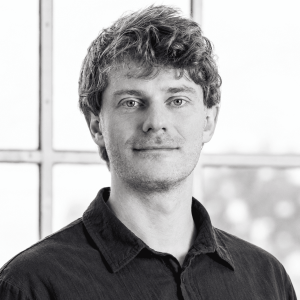
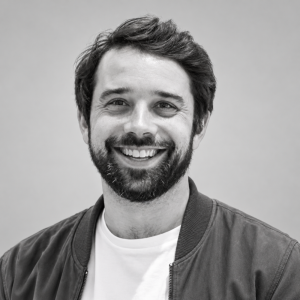
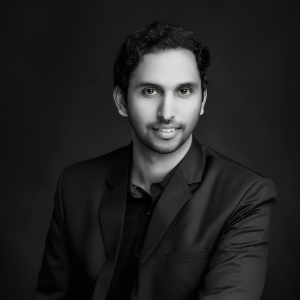
Ankur Edkie is an Indian technology entrepreneur, software engineer and co-founder of Murf AI, a company focused on artificial intelligence for speech generation and voice experiences. He co-founded Murf in October 2020 alongside Sneha Roy and Divyanshu Pandey, fellow IIT Kharagpur alumni. Murf began as an AI-powered voiceover platform and has since expanded into a broader voice technology company offering text-to-speech, voice generation, dubbing, voice conversion, APIs and real-time speech technology.
Early Career and Education
Edkie studied at the Indian Institute of Technology Kharagpur, completing a Bachelor of Technology between 2006 and 2010. His early professional career was focused on software engineering and large-scale technology systems.
Before founding Murf, Edkie worked at Sabre Holdings, where he contributed to Travelocity products. His work included software development and architecture, including the development of products associated with TravelGuru and Travelocity's hotel business. He subsequently spent approximately eight years at Goldman Sachs in engineering and technology roles, eventually serving as a Vice President and working on technology initiatives including AI and blockchain.
This background gave Edkie experience in software architecture, scalable systems and enterprise technology before he moved into entrepreneurship.
Founding Murf AI
Murf was founded in October 2020 by three IIT Kharagpur alumni: Ankur Edkie, Sneha Roy and Divyanshu Pandey. Murf's current About page describes the company's beginning as three founders, ten voices and three initial clients.
The founders were addressing a practical problem in digital content production: professional voiceovers traditionally required voice actors, recording equipment, studios, editing and repeated recording whenever a script changed. Murf's original proposition was to allow users to enter text, select an AI voice and generate professional-style narration without arranging a conventional recording session.
Elevation Capital, which invested in Murf's seed round, describes the company's original mission as using AI and voice technologies to generate realistic, human-sounding voiceovers for enterprises, small and medium-sized businesses and content creators.
Ankur Edkie's Role at Murf
Edkie became Murf's CEO and has played a central role in the company's technical direction. Public profiles describe his responsibilities as including AI model development, product engineering and the company's core technical architecture.
His contribution is therefore broader than simply founding the company. He has been associated with the technical architecture and development of the platform as Murf evolved from a text-based voiceover product into a wider voice technology infrastructure company.
Murf's development has involved improving speech naturalness, pronunciation, expressive delivery, multilingual generation, latency and the ability to integrate synthetic speech into software applications.
From AI Voiceovers to Voice Infrastructure
Murf's early product focused on generating voiceovers from written scripts. Its 2021 review described use cases including e-learning modules, training presentations, product demonstrations and advertisements.
The company subsequently expanded its product scope.
Today, Murf provides text-to-speech capabilities through its API, voice conversion, dubbing and other voice technologies. Its current API documentation describes two principal TTS models: Gen2 for studio-quality speech synthesis and Falcon 2 for fast streaming and conversational applications.
Falcon 2 was launched in 2026 and is designed for real-time voice applications. Murf's documentation reports time-to-first-audio below 100 milliseconds for its streaming implementation.
Murf's AI Voice Technology
Murf's technology converts written text into synthesized speech. The system must account for linguistic information, pronunciation, timing, pitch, speaking rate, style and other characteristics of spoken language.
The company's API exposes controls including voice selection, language or locale, pitch, speaking rate and speaking style. Murf's documentation also describes multilingual technology that allows certain voices to operate across multiple languages while retaining language-specific pronunciation characteristics.
Murf has not publicly disclosed every component of its underlying model architecture. Therefore, claims about specific internal neural architectures, training pipelines or proprietary model components should not be attributed to Murf unless the company explicitly documents them.
Voice Library and Multilingual Speech
Murf's current API documentation describes more than 150 voices across 35 languages and more than 20 speaking styles, while another current Murf help page reports more than 200 voices and 40+ languages and accents across its API ecosystem. Because availability differs by model and product, these numbers should be treated as product-dependent rather than as a single permanent voice count.
The platform includes voices designed for different languages, accents and speaking styles. Murf's documentation gives examples of styles such as conversational, narration, promotional, newscast and inspirational delivery.
Voice Actors and Responsible Voice AI
Murf says its voice technology is built around real people who choose to contribute their voices. The company states that it emphasizes compensation, legal protections and creator control.
The distinction is important because AI-generated speech depends on human voice data and raises questions about consent, licensing, compensation and control over digital representations of a person's voice.
Murf's terms specifically define a "Consenting Speaker" as a person who has given explicit written consent for recordings of their voice to be used to train a voice clone and synthesize that voice. The terms also prohibit submitting unauthorized third-party voice recordings for cloning.
Voice Cloning
Murf also provides voice-cloning capabilities. Its current documentation instructs users to clone only voices they own or have clear, documented consent to clone. Murf states that generated clones remain private to the workspace that created them and that submitted audio and text are not used to train Murf's general models for this feature.
This consent-based framework is an important part of the company's approach to synthetic speech because voice cloning can otherwise create risks involving impersonation, fraud, unauthorized commercial use and identity misuse.
AI Dubbing
Murf has expanded from voice generation into multilingual dubbing. Its Dubbing API supports automated and quality-assurance workflows across a range of source and destination languages. The documentation lists languages including English, Hindi, French, German, Spanish, Italian, Portuguese, Japanese, Mandarin, Korean, Tamil and several others.
This changes the role of synthetic speech from simply creating narration to helping companies localize existing audio and video content for different language markets.
Murf API and Real-Time Voice
Murf's API allows developers to integrate synthetic speech directly into applications. The current platform provides streaming and non-streaming speech generation, voice selection, styles, multilingual output and other controls.
The launch of Falcon 2 in 2026 represents another stage in Murf's evolution. Murf positions Falcon 2 for conversational AI and real-time voice agents, where response latency becomes particularly important.
This opens applications beyond traditional media production, including AI assistants, customer-service systems, conversational applications and other software that needs generated speech in real time.
Funding and Growth
Murf raised $1.5 million in seed funding in 2021 in a round led by Elevation Capital. The funding was intended to support hiring, research and development, voice synthesis technology and expansion into international markets.
In September 2022, Murf announced a $10 million Series A led by Matrix Partners India, with participation from existing investor Elevation Capital and prominent angel investors. At that point, Murf reported more than 120 AI voices across 20 languages and more than one million voiceover projects.
The company has subsequently expanded into enterprise voice infrastructure. Murf's current website says it serves more than 300 Forbes 2000 companies, although company-reported customer figures should be treated as self-reported business metrics.
The Three-Founder Structure
Murf was not created by Ankur Edkie alone.
The founding team consists of:
Ankur Edkie — Co-founder and CEO: technology, product engineering and AI/model development.
Sneha Roy — Co-founder and COO: operations, go-to-market and global growth. Murf currently describes Roy as its Co-founder and COO.
Divyanshu Pandey — Co-founder and Chief Business Officer: business development, strategic partnerships and commercial growth. Public career records identify his previous roles at Drip Capital and KredX, following earlier experience at Adani Enterprises and PwC.
All three founders have been publicly identified as IIT Kharagpur alumni and as the founding team of Murf.
Who Actually Invented Murf AI?
Calling Ankur Edkie the sole inventor of Murf would oversimplify the history.
Murf is publicly attributed to a founding team rather than to one inventor. Edkie's technical background and his documented role in model development, product engineering and architecture make him an important technical contributor. However, Sneha Roy and Divyanshu Pandey were also co-founders and played important operational, commercial and business roles in building the company.
The distinction is useful:
Founder: establishes and builds the company.
Engineer: develops software and technical systems.
Researcher: develops or investigates underlying AI methods.
Inventor: may be credited with a specific invention or patent.
Voice actor: provides human voice data or licensed vocal performance.
CEO: leads the company and its strategy.
These categories can overlap, but they are not interchangeable.
Based on publicly available evidence, Murf is better described as a product and technology company created by a founding team and subsequently developed by a broader engineering, research and voice-contributor organization. No single individual is publicly documented as the sole inventor of Murf's entire technology.
Current Murf AI
As of 2026, Murf has evolved considerably beyond its original AI voiceover product.
Its current technology portfolio includes:
- Text-to-speech
- AI voice generation
- Studio-based voiceover production
- Voice conversion
- Voice cloning
- AI dubbing
- Developer APIs
- Multilingual speech
- Streaming speech
- Real-time voice technology
- Voice infrastructure for conversational applications
Murf's API documentation currently identifies Falcon 2 as its latest streaming model and Gen2 as its studio-oriented synthesis model.
The company's current direction increasingly connects synthetic speech with conversational AI and voice agents rather than limiting the technology to prerecorded narration.
The Evolution of Murf
Murf's development can be understood as a series of stages:
2020 — Voiceover problem:
Three founders created Murf around the challenge of producing high-quality voiceovers more efficiently.
2021 — Product validation:
The platform expanded its use across e-learning, training, advertisements and product demonstrations.
2021 — Seed funding:
Murf raised $1.5 million from Elevation Capital and angel investors.
2022 — Series A:
The company raised $10 million from Matrix Partners India and existing investors.
2022 onward — Voice platform expansion:
Murf expanded its voice library, studio capabilities, APIs and enterprise applications.
2025–2026 — Real-time voice:
Murf introduced increasingly low-latency speech technology, culminating in Falcon 2 for real-time conversational applications.
2026 — Voice infrastructure:
Murf's product portfolio now spans speech generation, voice conversion, dubbing, APIs and real-time voice applications.
Conclusion
Ankur Edkie's significance in AI voice technology is closely tied to his role in building Murf AI rather than to a claim of being the sole inventor of synthetic speech.
His engineering background at companies including Sabre and Goldman Sachs preceded his transition into entrepreneurship. In 2020, he joined Sneha Roy and Divyanshu Pandey to establish Murf, initially targeting the difficult and expensive process of producing professional voiceovers.
Murf's trajectory illustrates how AI voice technology has moved from basic text-to-speech toward expressive speech, multilingual localization, voice cloning, dubbing, developer APIs and real-time conversational systems.