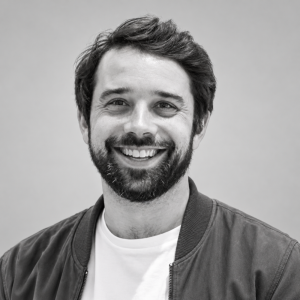
Pierre Barreau — Co-Founder of AIVA and Pioneer of AI Music Composition
Pierre Barreau is a French-Luxembourg-based computer scientist, composer, filmmaker, entrepreneur, and the CEO and co-founder of AIVA Technologies, the company behind AIVA (Artificial Intelligence Virtual Artist), an AI platform for generating music. AIVA identifies Barreau alongside Denis Shtefan and Vincent Barreau as its three co-founders.
Barreau's story sits at the intersection of several disciplines that are normally treated separately: computer science, music, filmmaking, artificial intelligence, and storytelling. His interest in combining technology with creative expression eventually led to AIVA, one of the early companies dedicated specifically to AI-assisted musical composition.
Early Creative Interests and Filmmaking
Before becoming known for AI music, Barreau was already interested in filmmaking and visual storytelling.
At the age of 15, he was nominated for a Gold Panda Award for Best Director for One Night in the Cosmos, a documentary series exploring the universe. TED's biography of Barreau identifies him as an entrepreneur, computer scientist, composer, and director and highlights his early filmmaking work.
His early experience with filmmaking was significant because it brought together several interests that would later become central to AIVA: technology, storytelling, music, and the creation of emotional experiences.
Barreau also grew up in an artistic and musical environment. Contemporary Luxembourg business reporting has described the Barreau family as being involved in music production and identified Vincent Barreau as Pierre's brother. Vincent would later become one of AIVA's co-founders.
Studying Computer Science
Barreau studied Computer Science at University College London (UCL) and completed his degree in 2016.
His computer-science education gave him the technical foundation to investigate whether artificial intelligence could be applied to an area traditionally associated with human creativity: musical composition.
Rather than treating programming and music as unrelated interests, Barreau began exploring how computational systems could learn musical patterns and use them to create new compositions.
The Her Inspiration
One of the defining moments in Barreau's story came after watching Spike Jonze's 2013 science-fiction film Her.
The film features Samantha, an artificial intelligence who composes music to capture an emotional moment in her relationship with Theodore.
Barreau has repeatedly described this scene as the inspiration for his idea of AI-generated personalized music. The concept fascinated him because music in the film functioned almost like a “musical photograph” — a way of preserving the feeling of a particular moment through sound.
The idea did not immediately become a finished product. Instead, it became a research question:
Could artificial intelligence actually learn enough about music to compose an original piece that reflected a particular moment, mood, or experience?
That question became the conceptual foundation for AIVA.
From Musical Photographs to AIVA
Barreau's original vision extended beyond simply generating background music.
He imagined a future in which people could receive music specifically adapted to their experiences, emotions, stories, films, games, or other creative situations.
The concept eventually became AIVA — Artificial Intelligence Virtual Artist.
AIVA was established in Luxembourg in 2016 around Barreau, Denis Shtefan, and Vincent Barreau. AIVA's current company profile identifies Barreau as CEO and co-founder, Shtefan as CTO and co-founder, and Vincent Barreau as COO and co-founder.
It is therefore more accurate to describe AIVA as a founding-team achievement rather than an invention by Barreau alone.
Denis Shtefan and Vincent Barreau
The three founders brought complementary backgrounds to the project.
Denis Shtefan, AIVA's CTO and co-founder, is described by the company as a published researcher and composer who leads research and development into creative and personalized music generation.
Vincent Barreau, Pierre's brother, is AIVA's COO and co-founder. AIVA describes him as an engineer and musician responsible for operations. Contemporary Luxembourg reporting also documents his engineering background and musical environment.
Pierre's role therefore cannot be separated from the contributions of his two co-founders. Barreau became the company's CEO and principal public-facing advocate, while Shtefan led research and Vincent focused on operations.
Teaching Artificial Intelligence to Compose Music
Early AIVA technology was based heavily on the idea that musical composition could be represented mathematically.
Instead of simply playing existing recordings back to the user, AIVA learned patterns from musical scores.
In his 2018 TED talk, Barreau explained that AIVA had learned from more than 30,000 musical scores. The system used machine-learning techniques to identify patterns in melody, harmony, rhythm, structure, and other aspects of musical composition.
Historical descriptions of AIVA's technology have included recurrent neural networks, convolutional neural networks, and evolutionary algorithms.
The fundamental process can be simplified as:
Musical scores → mathematical representation → pattern learning → musical prediction → new composition
The objective was not simply to reproduce an existing song. The system learned relationships within musical material and used those learned patterns to generate new compositions.
Genesis and Human-Musician Collaboration
One of AIVA's earliest major public demonstrations was Genesis, an album of AI-generated compositions released in 2016.
The project also demonstrated an important characteristic of AIVA's early technology: AI generation and human performance could work together.
AIVA's historical materials identify composer and conductor Olivier Hecho, pianist Eric Breton, and Pierre Barreau as collaborators in the production of the album.
This means that the early AIVA workflow should not be described as an AI independently producing a finished audio recording. The AI generated musical material, while human musicians could perform and produce that material.
SACEM Recognition
In 2017, AIVA reached a major milestone when its music became associated with SACEM, the French society representing authors, composers and music publishers.
European Commission materials described AIVA as the first virtual artist recognized by SACEM. AIVA also received commissions and participated in projects involving orchestral performances.
The milestone was historically important because it demonstrated that AI-generated musical works were beginning to enter established music-industry structures.
However, SACEM recognition should not be interpreted as a universal legal declaration that artificial intelligence has the same authorship status as a human composer. The legal implications of AI-generated works remain jurisdiction-specific.
TED and the Personalized Soundtrack Vision
In 2018, Barreau presented “How AI could compose a personalized soundtrack to your life” at TED.
The presentation explained AIVA's development and returned to the central idea that had originally inspired Barreau: music could potentially be generated specifically for individual experiences and moments.
The TED presentation helped introduce AIVA and the concept of AI-generated personalized music to a much wider international audience.
Evolution of AIVA
AIVA has changed significantly since its early classical-composition experiments.
The company's current platform supports more than 250 musical styles, audio and MIDI influence, custom style models, editing, and multiple export formats.
Its technology has also moved beyond the original score-centric approach.
AIVA's newer research includes Lyra, a transformer-based foundation model for instrumental music generation; OmniCodec, a neural audio codec; Influence, a system for conditioning generation using reference music; and ORAQL, a model designed to evaluate musical quality.
This represents a major evolution from the early AIVA systems that primarily learned from symbolic musical scores.
AIVA and the AI Music Industry
AIVA was one of the early companies to demonstrate that AI could be used for serious musical composition before the current generation of text-to-song platforms became widespread.
The modern AI music industry now includes platforms such as Suno, Udio, Stable Audio, Mubert, Beatoven.ai, and others.
AIVA's historical focus has remained particularly connected to instrumental composition, personalized music, soundtrack creation, musical influence, and composer workflows.
Human Creativity and AI
Barreau's work has also contributed to a broader discussion about the relationship between artificial intelligence and human creativity.
AIVA's early projects involved AI-generated compositions performed by human musicians. The company's product has also been positioned as a tool that can help creators generate ideas, experiment with styles, and develop musical material.
The AIVA story therefore does not simply ask whether machines can replace musicians.
It asks a broader question:
What happens when an AI system becomes another tool in the creative process?
Who Invented AIVA?
Pierre Barreau is the founder most strongly associated publicly with the original vision behind AIVA, particularly the idea of personalized music inspired by Her.
However, he was not the sole inventor of AIVA.
AIVA identifies Pierre Barreau, Denis Shtefan, and Vincent Barreau as co-founders. Their respective backgrounds in computer science, AI research, composition, engineering, music, business leadership, and operations contributed to turning the original idea into a functioning company and product.
The most accurate historical description is therefore:
Pierre Barreau was the central public-facing visionary behind the original AIVA concept, while AIVA itself was built by a founding team led by Barreau, Denis Shtefan, and Vincent Barreau.
Pierre Barreau's Legacy
Barreau's significance in AI music lies not simply in creating another music-generation product.
His contribution was connecting several worlds:
film + music + computer science + artificial intelligence + personalization.
The original idea came from imagining a fictional AI that could create music for a moment.
The real-world result became AIVA.
What began as a question inspired by Her developed into an AI music company whose technology progressed from learning musical scores to modern generative audio models.
Pierre Barreau's story is therefore part of a larger transformation in how humans think about creativity: not simply whether machines can create art, but how humans and machines might create it together.