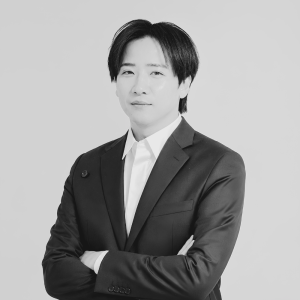
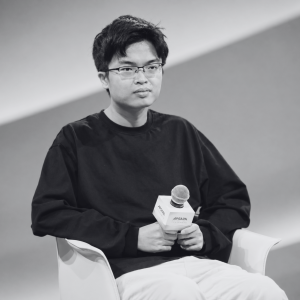
Víctor Pérez is a Spanish machine learning engineer and entrepreneur and the co-founder and CEO of Krea AI, a San Francisco-based generative AI company focused on making AI-powered creative tools more intuitive and controllable for artists, designers, marketers, and other creators. Krea was formally founded in March 2022 with Diego Rodriguez Prado.
Born in El Prat de Llobregat in the Barcelona metropolitan area, Pérez developed an early interest in both technology and creative disciplines. At 18, he seriously considered studying classical guitar at a conservatory before choosing an engineering path that allowed him to combine technical and creative interests. He studied Audiovisual Systems Engineering at Universitat Pompeu Fabra in Barcelona.
During his university years, Pérez met Diego Rodriguez, who introduced him to coding and generative adversarial networks. Pérez subsequently spent years exploring the intersection of machine learning and generative art. His early projects included ArtBreeder, ProsePainter, and "Sculpting with Words," a project presented at NeurIPS. He also co-authored research on Visual Transformer models presented at ICCV.
Before founding Krea, Pérez worked as Head of Machine Learning Research at Plyzer Intelligence in Barcelona from 2018 to 2020, focusing on graph neural networks and knowledge graphs for e-commerce applications. He later worked as a machine learning engineer in Berkeley, California, from 2020 to 2022.
In 2022, Pérez and Rodriguez were awarded scholarships to attend Cornell University. Pérez arrived at Cornell but left after a single day, choosing instead to pursue the opportunity to build a company around generative AI. Rodriguez had also applied for the founders' HF0 residency on their behalf. Krea was incorporated in March 2022 during that residency.
Krea's breakthrough came from a real-time image-generation prototype. During one of the founders' informal "Krea Dinners," Pérez built a demonstration using a recently published Latent Consistency Model. The system allowed users to sketch through a webcam and watch AI transform their drawings in real time. A video of the prototype posted to Twitter/X attracted immediate attention and reportedly generated $10,000 in subscription revenue within 24 hours, before Krea had officially launched.
Under Pérez and Rodriguez's leadership, Krea evolved from an interface that orchestrated multiple third-party AI models into a broader creative AI platform. Its capabilities expanded into image generation, video generation, image-to-3D conversion, LoRA-based model training, workflow automation, and image enhancement.
Krea raised approximately $83 million across its reported funding rounds, including a $3 million seed round, a $33 million Series A led by Andreessen Horowitz, and a $47 million Series B led by Bain Capital Ventures in April 2025. The Series B valued Krea at approximately $500 million.
A major milestone arrived in May 2026 with the launch of Krea 2, Krea's first foundation image model developed entirely from scratch. In June 2026, Krea released Krea 2 Turbo and open-sourced the Krea 2 model family alongside a detailed technical report. The company subsequently reported more than 30 million users across 191 countries.
Pérez's achievements include recognition in the MIT COVID-19 Challenge, a NeurIPS presentation, an ICCV research publication, and inclusion alongside Diego Rodriguez in Forbes' 30 Under 30 Media category for the 2026 list.
His personal net worth has not been publicly disclosed. While Krea's company valuation reached approximately $500 million following its 2025 Series B, there is no verified public figure for Pérez's personal wealth, salary, investments, or assets.
Pérez's professional philosophy centers on using AI as a creative instrument rather than a replacement for human creativity. His work at Krea has focused on giving creators greater control over generative systems through real-time interaction, visual workflows, and style control. His journey from audiovisual engineering and generative-art experiments to building a major creative AI platform illustrates the intersection of technical research, artistic experimentation, and entrepreneurship.