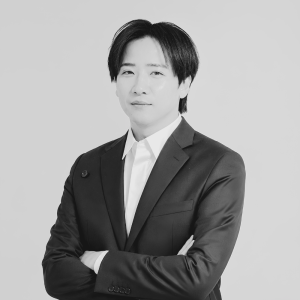
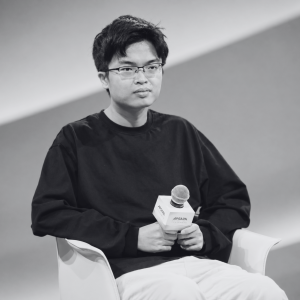
Victor Riparbelli is a Danish entrepreneur, technology executive and the co-founder and CEO of Synthesia, an AI video company that has become one of Europe's most prominent enterprise artificial-intelligence businesses.
Riparbelli played the central entrepreneurial role in transforming academic research in computer vision and facial reenactment into a commercial platform for AI-generated video. Under his leadership, Synthesia moved from an early focus on entertainment, advertising and video dubbing toward enterprise applications such as employee training, onboarding, sales enablement and internal communications.
Early Life and Education
Riparbelli grew up in Denmark and developed an early interest in computers, science fiction and technology. He has described himself as a rebellious child who was drawn to books, computers and ambitious ideas about what technology could make possible.
He studied computer science at the IT University of Copenhagen, earning a Bachelor of Science. During his studies, he spent a semester at Stanford University. The experience exposed him to Silicon Valley's entrepreneurial culture and influenced his ambition to build a technology company.
After university, Riparbelli moved to London and became involved in the emerging VR and AR startup ecosystem.
Discovering Face2Face
A pivotal moment in Riparbelli's career came when he encountered research by computer-vision scientist Matthias Niessner.
Niessner and his collaborators had developed Face2Face, a research system capable of real-time facial reenactment. The technology demonstrated how facial expressions from one video could be transferred to another person's face.
Riparbelli recognized that this type of technology could eventually transform video production. Rather than requiring cameras, studios and conventional production workflows for every piece of content, AI could potentially allow video to be generated through software.
He contacted Niessner, beginning the relationship that ultimately led to Synthesia.
Founding Synthesia
Riparbelli co-founded Synthesia in 2017 alongside Matthias Niessner, Lourdes Agapito and Steffen Tjerrild.
The founding team combined computer-vision research with entrepreneurship and business operations. Niessner and Agapito contributed deep expertise in computer vision and 3D reconstruction, while Riparbelli and Tjerrild focused heavily on turning the technology into a scalable commercial company.
The initial challenge was substantial. Early versions of the technology required significant technical work and were far removed from a simple commercial product. Riparbelli has described the early process as requiring enormous amounts of specialist effort to produce even short video clips.
The company's mission became to abstract away this complexity and make AI-generated video accessible through a simple software interface.
From Deepfake Research to Business Video
Synthesia's underlying technology originated in research closely related to facial reenactment and synthetic media. This created both a technological opportunity and a significant responsibility.
The company initially explored entertainment, advertising and dubbing applications. However, Riparbelli and the team discovered that these markets did not provide the scalable business opportunity they expected.
A major turning point came when enterprises began approaching Synthesia with practical requests.
Large organizations were less interested in replacing Hollywood productions than in solving everyday communication and training problems. Companies needed to produce employee-training videos, onboarding materials, product education and internal communications repeatedly, often across multiple languages.
This led to one of the most important strategic decisions in Synthesia's history: the company pivoted toward enterprise business applications.
Riparbelli summarized the insight with the idea that the future of Synthesia was more "PowerPoint than Pixar."
The phrase captured the company's new direction. Synthesia did not need to replace every form of traditional filmmaking. Instead, it could solve a large and recurring business problem: turning information into professional video quickly, consistently and at scale.
Building the Enterprise AI Video Platform
Under Riparbelli's leadership, Synthesia evolved from an experimental synthetic-media technology into a cloud-based enterprise platform.
Users could write or provide a script, select an AI avatar and voice, choose a language and generate a business video without conventional filming.
The platform became particularly relevant to Learning & Development departments, where organizations regularly need to create and update employee-training content.
Other applications expanded to include sales enablement, customer education, onboarding, compliance training, internal communications, technical training and multilingual communication.
This enterprise positioning became a defining characteristic of Synthesia's business.
Fundraising and Company Growth
Building Synthesia required persistence in addition to technical innovation. Riparbelli has spoken publicly about the difficulty of fundraising during the company's early period, including receiving numerous investor rejections.
One important early investment came from entrepreneur and investor Mark Cuban, following a lengthy exchange initiated through a cold email.
Synthesia subsequently attracted major institutional investors and achieved unicorn status as the business expanded.
The company later raised increasingly large financing rounds as investors placed greater value on enterprise generative AI and the potential market for AI-generated video.
By 2026, Synthesia had reached a multibillion-dollar valuation and had established a substantial global enterprise customer base.
Product Evolution
Synthesia's product has expanded significantly beyond its original avatar-video concept.
The platform has developed capabilities around AI avatars, synthetic voices, multilingual video creation, translation, video editing, templates, enterprise governance and increasingly interactive experiences.
The strategic direction has also shifted from simply generating videos toward making video interactive.
Instead of creating a video that employees passively watch, AI-generated avatars can potentially become interfaces for training, simulation and conversation. This creates opportunities for applications such as role-play, sales practice, employee coaching and interactive learning.
Riparbelli has increasingly positioned this transition toward conversational and agent-powered video as an important part of Synthesia's future.
Responsible AI and Synthetic Media
Because Synthesia's technology is related to synthetic media and facial-reenactment research, responsible AI has been an important component of the company's positioning.
Synthesia emphasizes consent for avatar creation, content moderation and responsible deployment of synthetic media.
The company has also promoted enterprise governance and controls designed to reduce misuse and support organizations deploying synthetic-media technology at scale.
This approach reflects one of the central challenges of AI video: the same technologies that make communication easier can also be abused to create misleading or deceptive media.
Leadership Philosophy
Riparbelli's leadership has been characterized by a combination of technical ambition and pragmatic market selection.
Rather than attempting to commercialize synthetic video solely as a futuristic entertainment technology, he and the Synthesia team identified a large enterprise workflow where traditional video production was expensive, slow and difficult to update.
The resulting strategy was to make video production more like software creation: write, edit, localize, update and distribute content digitally.
This distinction became central to Synthesia's identity.
Impact on AI Video
Riparbelli is closely associated with the commercialization of AI-generated avatar video for enterprise applications.
Synthesia helped demonstrate that generative AI video could have a practical business model beyond entertainment and experimental demonstrations.
The company's enterprise focus also helped establish AI video as a tool for organizational knowledge distribution rather than simply a creative-production technology.
Its customer base includes major global organizations using AI video for training, communications, enablement and localization.
Legacy and Future Direction
Victor Riparbelli's most significant contribution is the transformation of a technically complex area of computer-vision research into an accessible enterprise software category.
Synthesia's trajectory illustrates a broader lesson in AI entrepreneurship: breakthrough research does not automatically produce a successful company. Commercial success can depend on identifying a recurring problem where the technology delivers measurable economic value.
For Synthesia, that opportunity emerged in corporate communication and learning.
The company's next phase is increasingly focused on interactive and conversational video powered by AI agents. If successful, this could move synthetic video from a production medium toward an interactive interface through which people learn, practice, communicate and access information.
Riparbelli therefore represents an important figure in the development of enterprise generative AI, particularly at the intersection of computer vision, synthetic media and business software.